
Last updated September 23, 2026
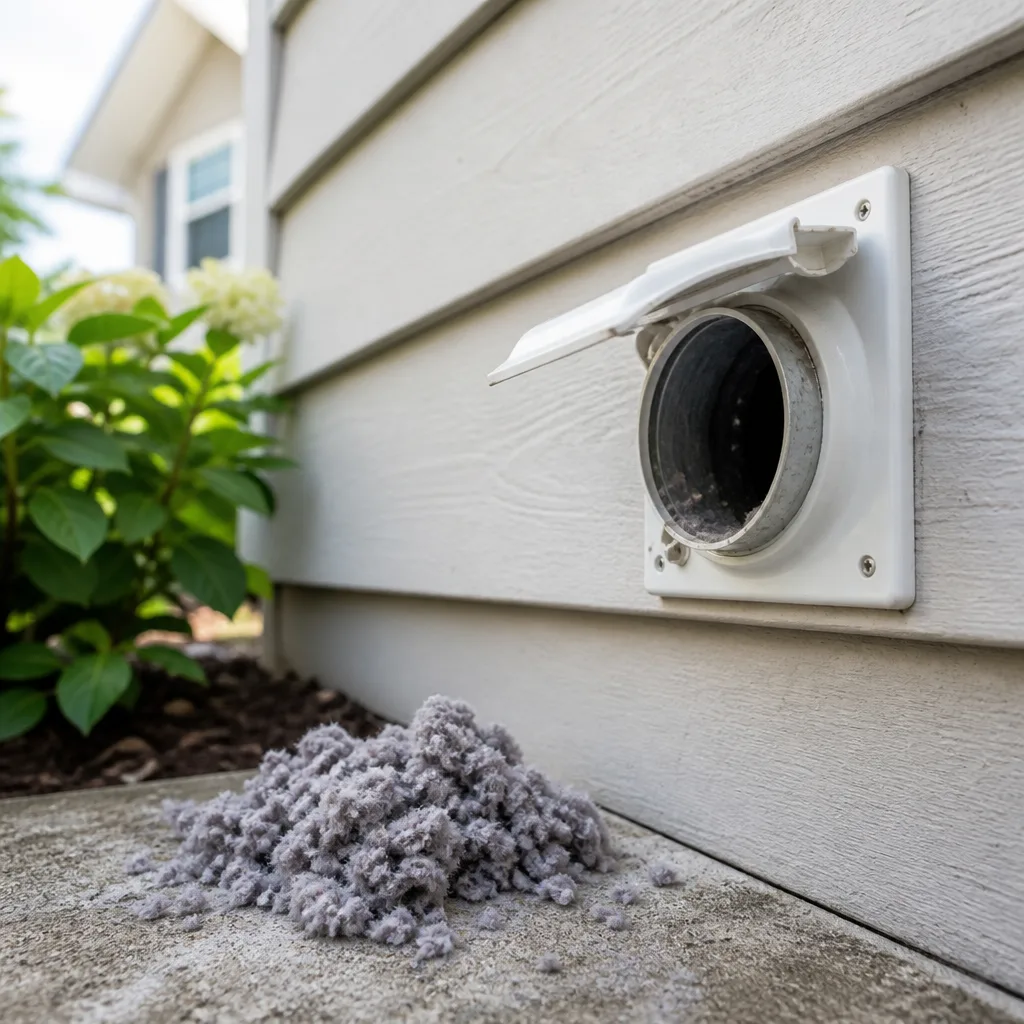
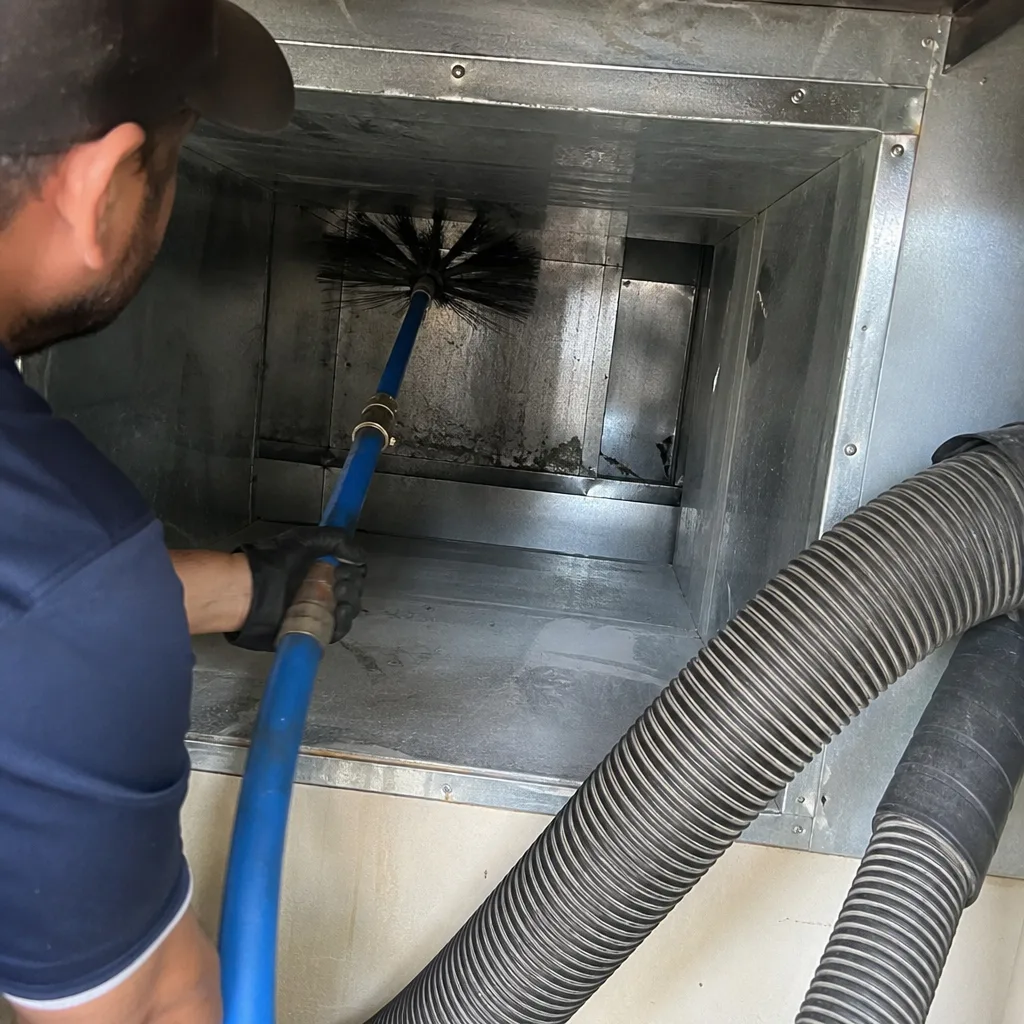
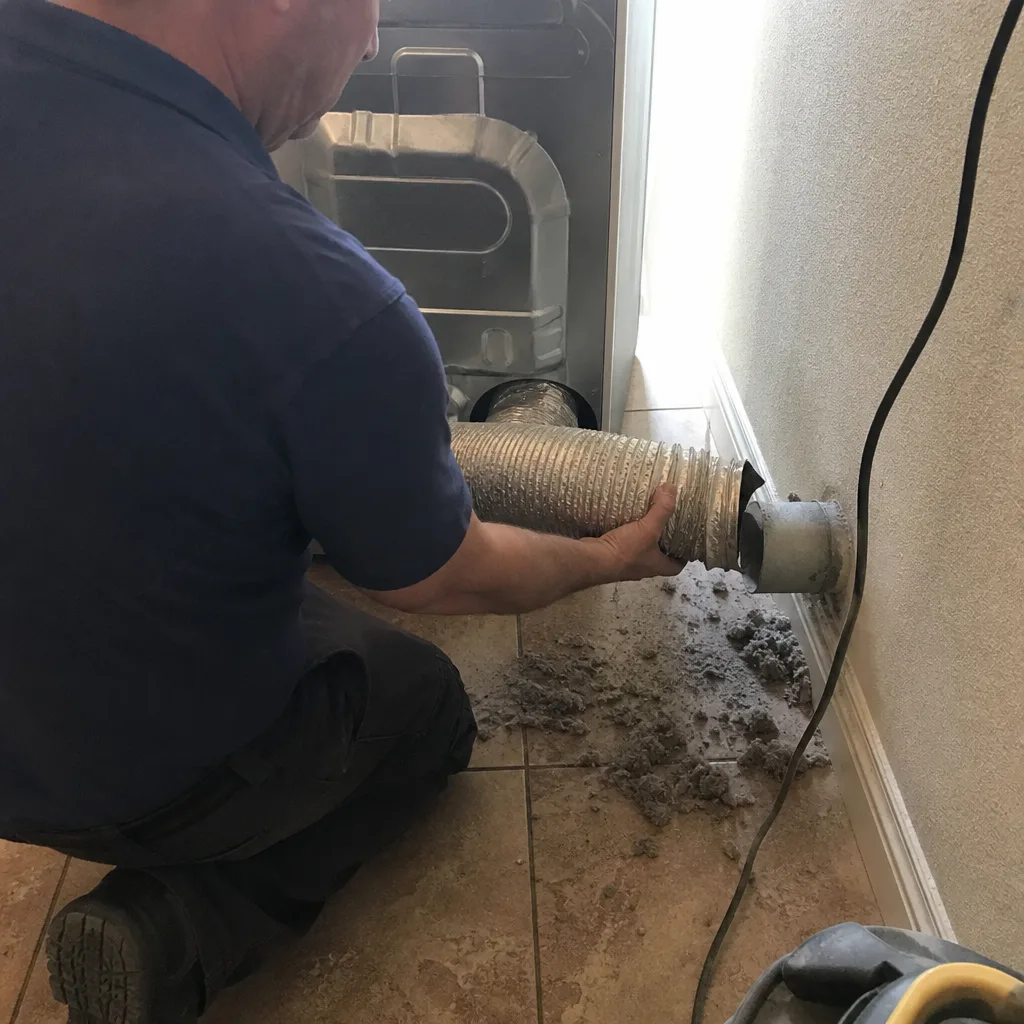
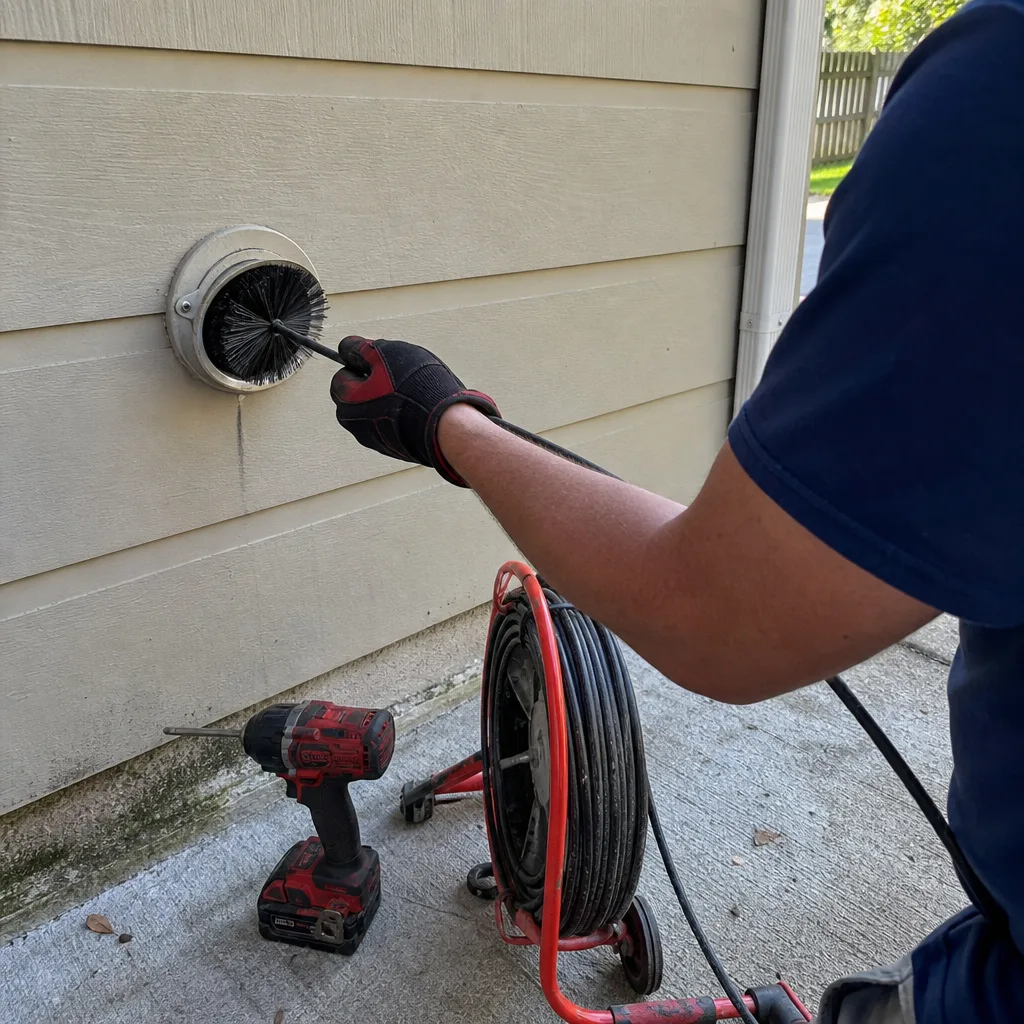
Whole-system duct and dryer vent check with before-and-after photos - you see exactly what came out of your vents
That "$99 whole-house special" is a bait ad - the real number appears once they are in your hallway, or the "clean" is a shop-vac at the register. We photograph the inside of your ducts before and after instead.
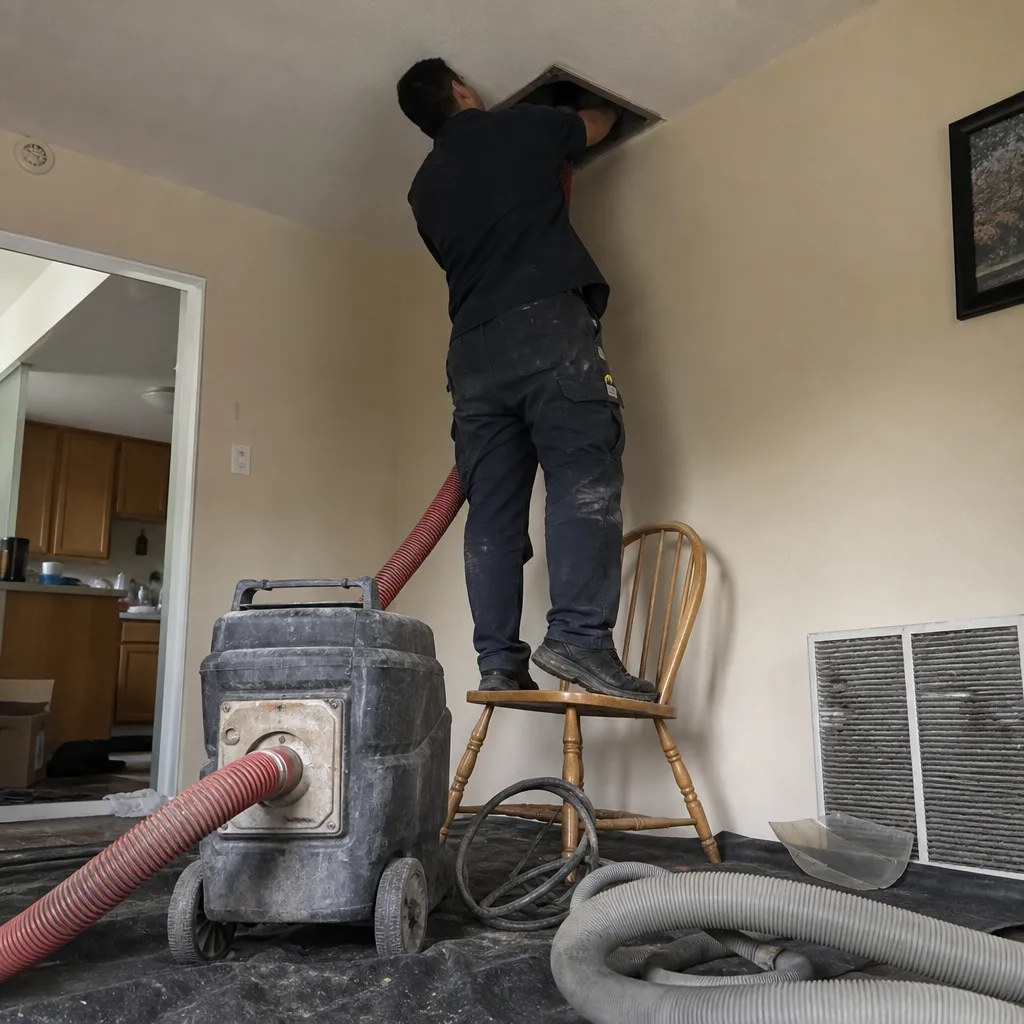 Before
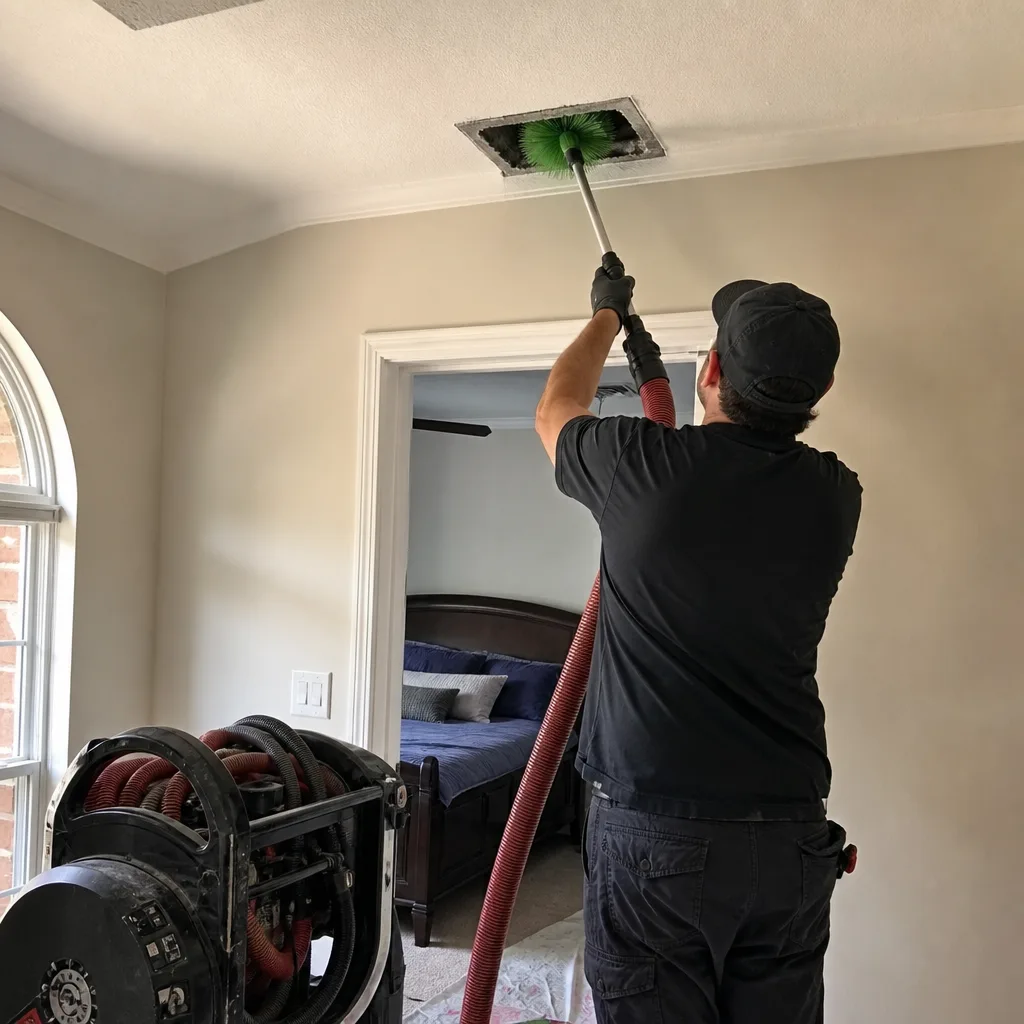 After
After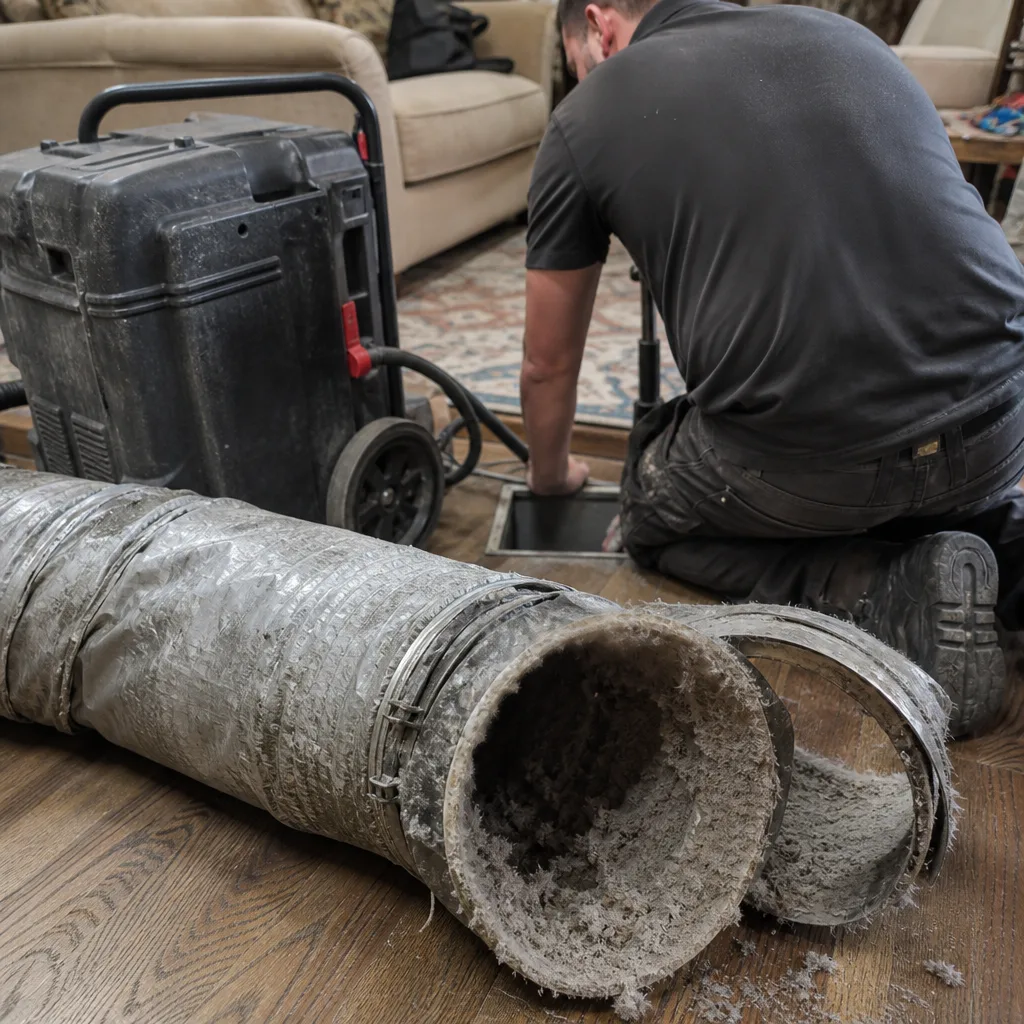 Before
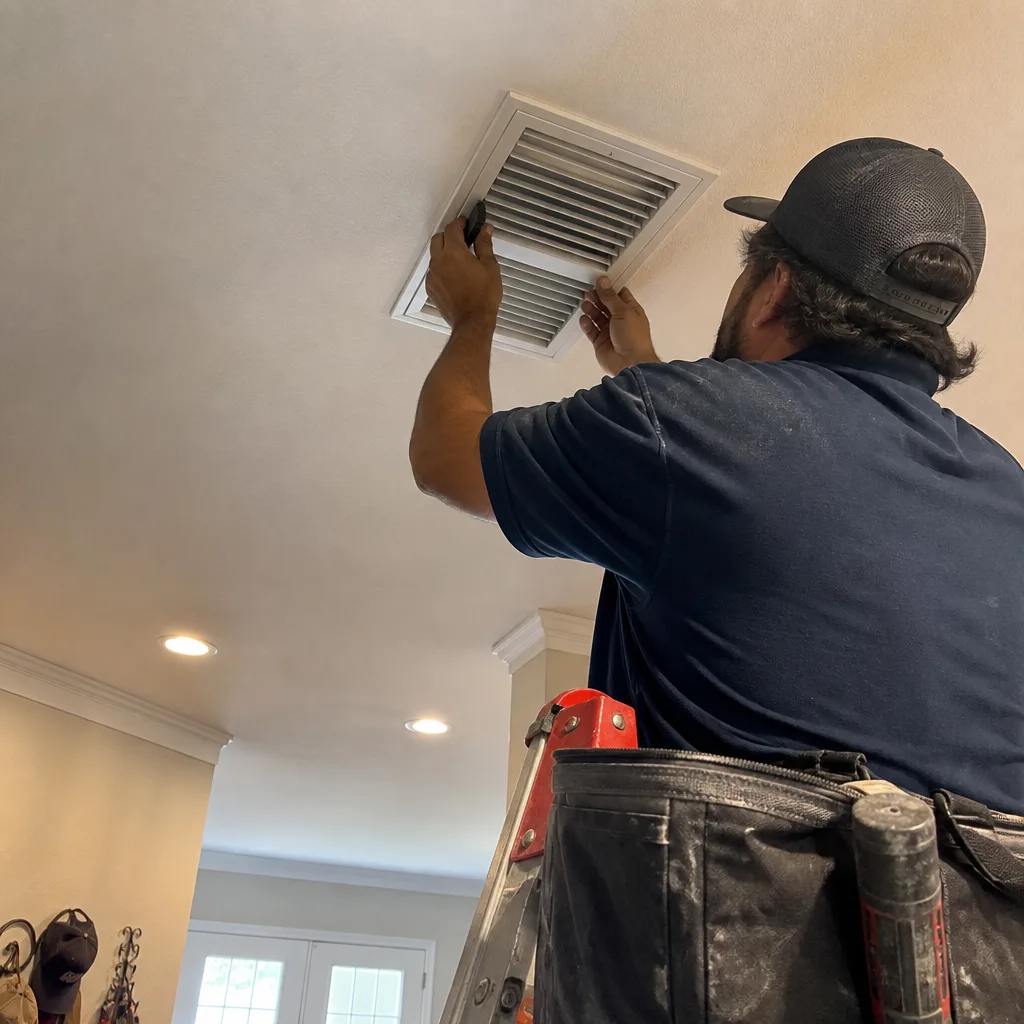 After
After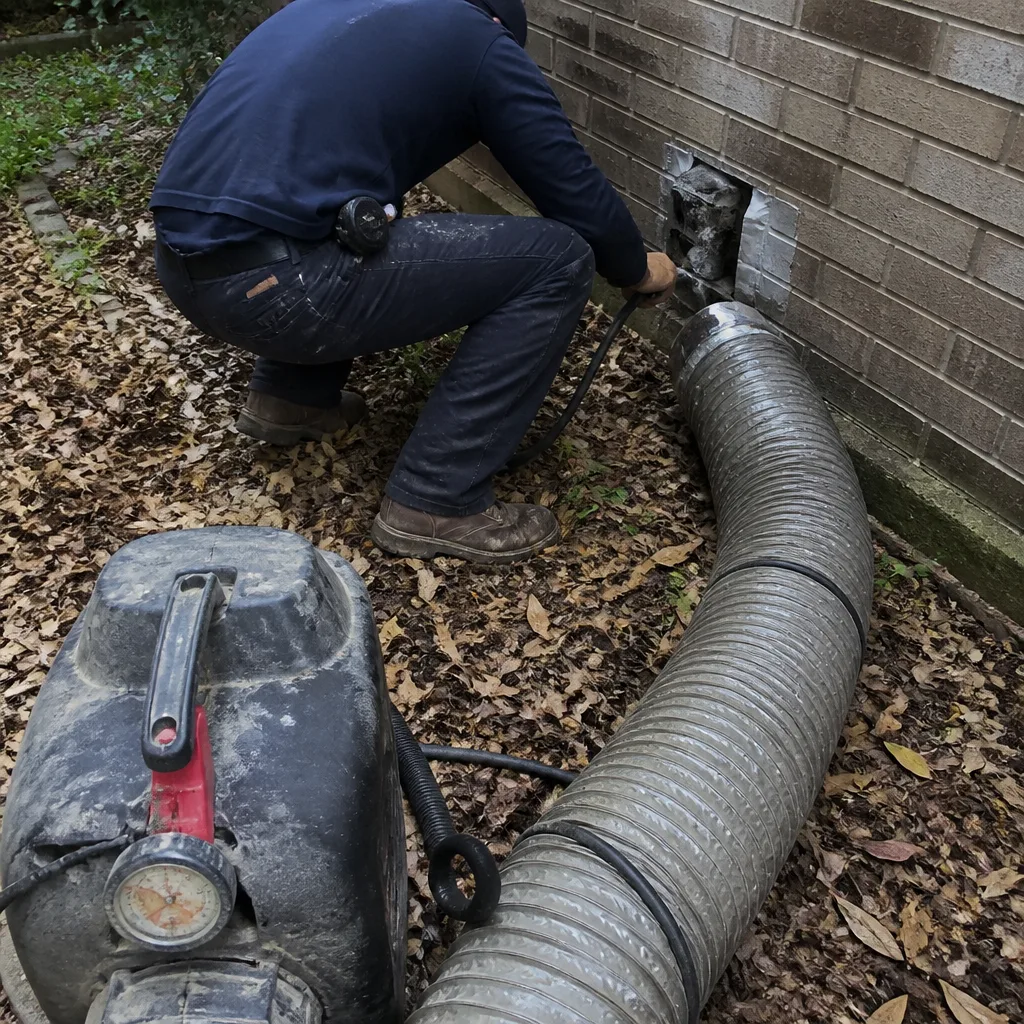 Before
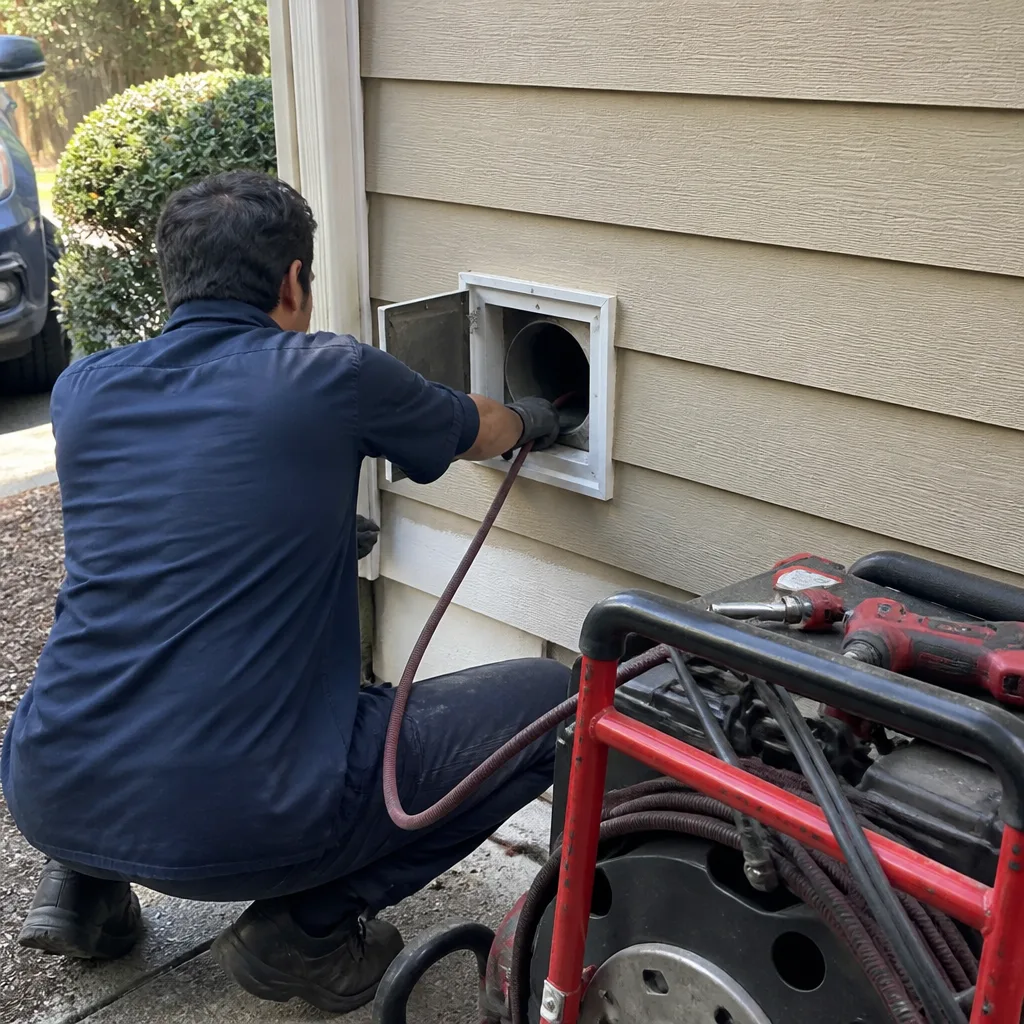 After
AfterAir Duct Cleaning Warning Signs: A The Woodlands Homeowner’s Reference Guide
Visible dust collecting at your supply register is actually one of the least reliable signs that your ducts need cleaning. In most cases, it means your filter is catching particles before they enter the living space, which is exactly what it should do. The warning sign that experienced technicians actually watch for is the one most homeowners dismiss as normal: one bedroom that’s consistently five degrees warmer than your thermostat set point in summer, or colder in winter. In The Woodlands, where summer attic temperatures routinely exceed 140°F and spring pollen loads are among the highest in Texas, duct problems develop faster than in cooler climates, but they announce themselves differently than the industry marketing suggests. This guide reassigns each warning sign to its actual cause, so you know what you’re looking at and what action it demands. For a deeper dive, see our The Complete Guide to Air Duct Cleaning in The Woodlands.
Quick Answer
The most reliable warning signs that your Air Duct Cleaning professionals should address in The Woodlands are: persistent room-to-room temperature differences of more than 3°F, musty odors that appear within 30 seconds of system startup, filters loading faster than every 60 days, and visible debris or moisture staining at register boots. These indicate restricted airflow, biological growth in the plenum, return-side leakage, or post-storm condensation damage, respectively. Dust at registers, by contrast, usually indicates a filter issue, not dirty ducts.
Table of Contents
- The Eight Observable Warning Signs Most Homeowners Misread
- The Odor Taxonomy: What Each Smell Actually Means
- How to Measure Differential Airflow Without Equipment
- Warning Signs Specific to The Woodlands Climate
- Triage Table: Sign, Cause, and Action
- Common Mistakes to Avoid
- When to Call a Professional
- Frequently Asked Questions
BeforeAfterThe Eight Observable Warning Signs Most Homeowners Misread
Homeowners in The Woodlands are bombarded with marketing that trains them to look for dramatic, visible problems: dust explosions at registers, insect infestations, mold blooms on walls. These do happen, but they’re late-stage events. The earlier, more reliable indicators are subtler and often misattributed to equipment failure.
1. Differential Room Temperature (The Sign Technicians Trust Most)
When one room runs five or more degrees off the thermostat set point while the system is actively running, the cause is usually airflow restriction or duct leakage, not a failing compressor or low refrigerant. We’ve documented this hundreds of times in The Woodlands homes built between 2015 and 2020, particularly in two-story plans where the upstairs trunk line was sealed with mastic that cracked during the first summer of 120°F attic temperatures.
The physics are straightforward: conditioned air is escaping before it reaches the room, or the return path is blocked, creating a pressure imbalance that starves the register. Homeowners often spend $800-$2,400 on unnecessary refrigerant charges or capacitor replacements before discovering a disconnected flex duct in the attic.
2. Filter Loading Rate Acceleration
A filter that suddenly needs replacement every 30 days instead of every 90 indicates return-side leakage. Your system is pulling unfiltered attic air through gaps in the return plenum or duct seams, overloading the filter with particulate it was never sized to handle. In The Woodlands, where construction dust from ongoing development in Grogan’s Mill and Sterling Ridge still settles in attics, this accelerated loading is common in homes less than five years old.
3. Musty Odor on Startup (Not Continuous)
An odor that hits within 30 seconds of the blower engaging, then dissipates after two to three minutes, points to biological growth on the evaporator coil or in the supply plenum, not general duct contamination. The rush of air disturbs the microbial layer. Continuous musty odor, by contrast, suggests a broader moisture problem. The distinction matters because the required action differs significantly.
4. Visible Debris at the Register Boot (Not the Register Itself)
Debris visible at the register face is often recent household dust that settled after the system cycled off. Debris packed against the boot, the sheet-metal transition behind the register, indicates accumulation upstream that has progressed past the point where DIY maintenance helps. In The Woodlands, we regularly find this pattern in homes downwind of the ongoing construction along Kuykendahl and Gosling, where fine particulate infiltrates return paths through soffit vents.
5. Whistling or Hissing at Registers
High-velocity airflow noise at a specific register, especially one that wasn’t noisy when the home was new, indicates a duct run that has become partially obstructed or a damper that has shifted closed. The system is forcing the same air volume through a smaller opening. This creates back-pressure that strains the blower motor and reduces airflow to distant rooms.
6. Condensation on Register Faces in Summer
Cold supply air hitting a humid room creates minor condensation. Persistent, heavy condensation that drips onto drywall indicates supply-air temperature that is too low, usually from restricted airflow across the evaporator coil, or from a duct run that passes through an unconditioned space without adequate insulation. In The Woodlands, where July humidity routinely hits 85%, this sign appears in attic flex runs that have compressed or separated at the insulation sleeve.
7. Increased Dust Settlement on Horizontal Surfaces
Not all dust increase is duct-related. But if you’re cleaning surfaces twice as often as when you moved in, and the dust has a fibrous, insulation-like quality, you’re likely pulling attic fiberglass through return leaks. The dust from duct contamination tends to be finer and more uniform; attic infiltration produces visible fibers and larger, irregular particles.
8. Blower Motor Cycling More Frequently
Short-cycling, where the blower turns on and off more often than it used to, can indicate that the system is struggling to maintain pressure against duct restriction. The thermostat satisfies quickly near the sensor, then the temperature drifts as conditioned air fails to reach distant rooms. Homeowners in The Woodlands’ older sections, like Panther Creek and Cochran’s Crossing, often notice this first in converted garage spaces or additions where the original duct sizing was never updated.
The Odor Taxonomy: What Each Smell Actually Means
Smell is the most direct diagnostic tool available to homeowners, but only if you know what each odor profile indicates. The timing, duration, and character of duct-related smells point to distinct root causes with distinct solutions.
Musty on Startup Only
Appears within 30 seconds of blower engagement, fades within three minutes. Indicates microbial growth on the evaporator coil or in the immediate supply plenum, where standing water from inadequate drainage has created a biological film. The growth is disturbed when airflow begins, then settles. Action: HVAC cleaning with coil treatment, not full duct cleaning. Our HVAC Cleaning in The Woodlands service addresses this specifically.
Musty Continuous
Present whenever the system runs, sometimes detectable even when it’s off. Indicates moisture intrusion into the duct system itself, usually from a disconnected condensate drain, a roof leak at a chase, or post-storm water entry through soffit vents. The microbial load has colonized the duct interior. Action: Camera inspection to locate the moisture source, followed by targeted duct repair and cleaning. In The Woodlands, we see this pattern frequently after hurricane season, when wind-driven rain enters attic vents and saturates insulation that contacts metal ductwork.
Burned or Oily on First Heat
Appears during the first heating cycle of fall, then diminishes. Usually dust accumulation on heat exchanger surfaces or electric strip heaters, not a duct problem at all. The smell is alarming but typically benign. Action: If it persists beyond three cycles, schedule heating system inspection. If it accompanies visible smoke or soot, shut down and call immediately.
Chemical or Solvent-Like
Sharp, acrid, unnatural smell. Can indicate deteriorating duct liner adhesive, off-gassing from nearby stored chemicals drawn into return leaks, or in rare cases, refrigerant leak passing through the duct system. Action: Shut down and inspect. This is not a cleaning issue; it’s a potential health hazard.
Sweet or Ether-Like
Refrigerant leaks produce a faintly sweet odor. If detected at registers, the leak may be in the indoor coil, and the blower is distributing the vapor. Action: Immediate HVAC technician call, not a duct cleaner.
Rotten Egg or Sulfur
Natural gas odor. If detected at registers, this indicates a gas leak near a return intake, not a duct problem. Action: Evacuate and call the gas utility emergency line. Do not operate the system.
The key distinction for homeowners: startup-only odors point to coil/plenum issues; continuous odors point to duct moisture intrusion; seasonal first-heat odors are usually benign; chemical or unusual odors demand immediate shutdown and professional diagnosis.
How to Measure Differential Airflow Without Equipment
You don’t need a manometer or anemometer to detect meaningful airflow differences between rooms. The tissue-at-register test, performed correctly, reveals restriction patterns that indicate where to look next.
The Test Procedure
- Set your thermostat to a single-stage cooling demand at least 8°F below current room temperature, so the system runs continuously for the test.
- Close all interior doors. This isolates each room’s register as the sole pressure relief path.
- Hold a single ply of bathroom tissue vertically, 2 inches from each supply register face, not touching the grille.
- Observe the tissue’s behavior for 10 seconds at each register.
- Repeat at all return registers, holding the tissue 2 inches away and observing whether it draws toward the grille.
What the Results Mean
- Tissue pulls strongly horizontal and holds steady: Normal supply airflow for that register size.
- Tissue barely moves or flutters weakly: Significant restriction in that duct run. Common causes: collapsed flex duct, obstruction at a damper, or heavy debris accumulation at an elbow.
- Tissue blows away from register: Unusual; indicates pressurization of the room, usually from an oversized supply or blocked return path.
- Return register shows no inward draw: Return path is blocked or the duct is disconnected. The room is not contributing to system airflow.
- Strong variation between rooms on the same system: Duct imbalance that the system cannot correct through damper adjustment alone.
When to Escalate
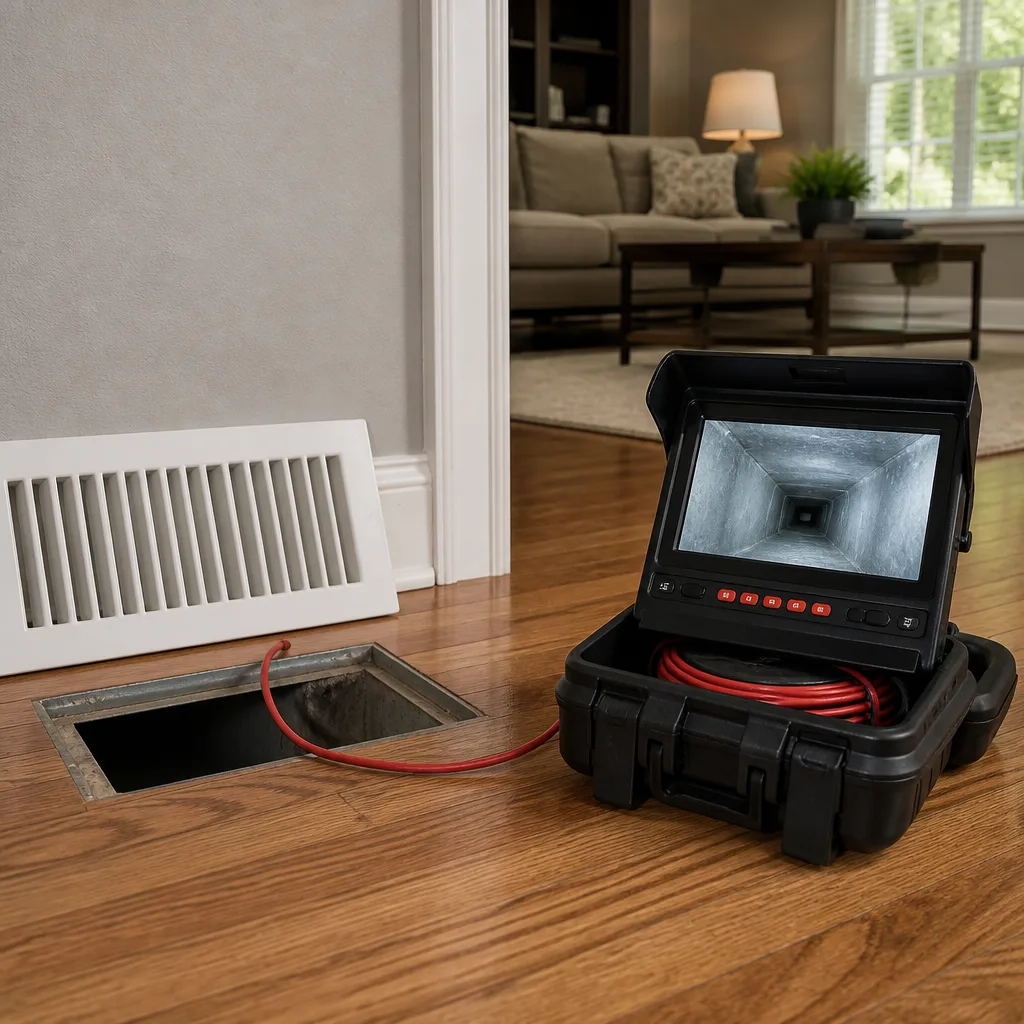
If one or more supply registers show less than half the tissue movement of the strongest register, or if any return shows no inward draw, the finding warrants a camera inspection. We’ve found that in The Woodlands homes, a 50% or greater differential between registers on the same trunk line almost always corresponds to a measurable obstruction or leakage point visible on camera. The tissue test won’t tell you what the obstruction is, but it tells you exactly which duct runs to inspect first, saving diagnostic time and cost.
Warning Signs Specific to The Woodlands Climate
The Woodlands presents a specific set of duct stressors that produce warning signs rarely seen in drier or cooler markets. Understanding these local patterns prevents misdiagnosis and delayed response.
Post-Hurricane-Season Condensation Damage
From June through November, wind-driven rain enters attic soffit vents and ridge vents, particularly on homes with east-facing exposures. The moisture contacts cold ductwork and creates a distinctive pattern: water staining on the ceiling around register boots, appearing 2-6 weeks after the storm event, not immediately. The delay confuses homeowners who assume a roof leak would show right away. What’s actually happening is slow moisture wicking through insulation, contacting the metal boot, then evaporating into the conditioned space when the system runs.
The smell is specific: a sharp, mineral odor like wet concrete, distinct from the organic must of microbial growth. The visual sign is staining that appears as a faint yellow-brown ring on the ceiling, narrower than a roof leak would produce, centered on the register. If you see this pattern after hurricane season in The Woodlands, the duct boot seal has failed and attic moisture is entering the conditioned envelope. The required action is duct repair and sealing, not cleaning alone.
Freeze-Related Duct Separation
The February 2021 freeze and subsequent winter events caused a specific failure mode in The Woodlands: duct separation at flex-to-metal connections. When attic temperatures drop below 20°F, the mastic sealing these joints becomes brittle. The thermal expansion differential between metal and flex, repeated over several cold nights, cracks the seal. Homeowners often discover this in spring, when warming attic temperatures reveal the gap through sudden dust increase or temperature imbalance.
From an attic access hatch, look for flex duct that has pulled 1-3 inches back from the metal collar, exposing insulation core. The gap is often invisible from below but obvious from above. In The Woodlands homes built 2015-2019, we’ve found this pattern concentrated in upstairs runs where the original installer used minimal mechanical fastening. The warning sign from the living space is the sudden appearance of differential temperature in a room that previously conditioned normally.
Pollen Load and Filter Bypass
The Woodlands’ pine pollen season, typically late February through April, produces particulate loads that overwhelm standard 1-inch filters. When filters load completely, the pressure differential can pull unfiltered air around the filter frame through gaps in the return grille seal. This bypass air enters the blower without filtration, depositing pollen and dust directly into the supply plenum.
The warning sign is a sudden, dramatic dust increase that coincides exactly with pollen season, then diminishes in May. Homeowners who replace filters on calendar schedule rather than pressure-drop schedule miss this pattern. The correct response is more frequent filter changes during pollen season, plus inspection of the return grille seal for gaps that allow bypass.
Triage Table: Sign, Cause, and Action
| Warning Sign | Likely Cause | Homeowner Action |
|---|---|---|
| One room 5°F+ off set point | Duct leakage or restriction | Call for camera inspection |
| Filter loads in under 60 days | Return-side leakage | Inspect return plenum and grille seals; call if gaps found |
| Musty odor on startup only | Coil or plenum microbial growth | Schedule HVAC cleaning |
| Musty odor continuous | Moisture intrusion in ducts | Call for camera inspection and repair estimate |
| Debris at register boot | Upstream accumulation | Call for camera inspection |
| Whistling at specific register | Partial obstruction or shifted damper | Check for closed damper; call if not found |
| Heavy condensation on register face | Restricted airflow or uninsulated run | Call for inspection |
| Fibrous dust increase on surfaces | Attic infiltration through return leaks | Inspect attic return path; call for sealing |
| Blower short-cycling | Duct restriction causing pressure imbalance | Call for diagnostic |
| Post-storm ceiling staining at register | Failed boot seal, moisture wicking | Call for repair; monitor for mold |
| Sudden spring dust increase | Filter bypass during pollen season | Increase filter change frequency; inspect seal |
Common Mistakes to Avoid
- Replacing equipment before inspecting ducts. We’ve seen The Woodlands homeowners spend $6,000-$12,000 on new condensers when a $400 duct reconnection solved the temperature imbalance. Differential airflow is a duct problem until proven otherwise.
- Assuming visible dust means dirty ducts. Dust at the register face is normal filter performance. Dust packed at the boot, or dust that appears within 48 hours of cleaning, indicates a duct issue worth investigating.
- Ignoring odors that fade quickly. The startup-only musty smell that disappears in three minutes is often dismissed as “just the system warming up.” It’s actually the most reliable indicator of coil/plenum microbial growth, and it’s cheaper to address early than after it spreads.
- Using the cheapest filter that fits. MERV 1-4 fiberglass filters protect equipment but don’t capture the fine particulate that accumulates in ducts. In The Woodlands’ high-pollen environment, MERV 8-11 pleated filters changed on pressure-drop schedule, not calendar schedule, reduce duct loading significantly.
- Sealing registers with tape or caulk. Homeowners sometimes try to “fix” register gaps with consumer-grade tape, trapping moisture and creating ideal conditions for microbial growth. Register boots should seal to drywall with proper mastic or foam, applied from the attic side.
- Waiting for a visible mold bloom. By the time mold is visible on walls or ceilings, the duct contamination has progressed far beyond the point where cleaning alone suffices. The early signs, odor and airflow differential, appear months earlier.
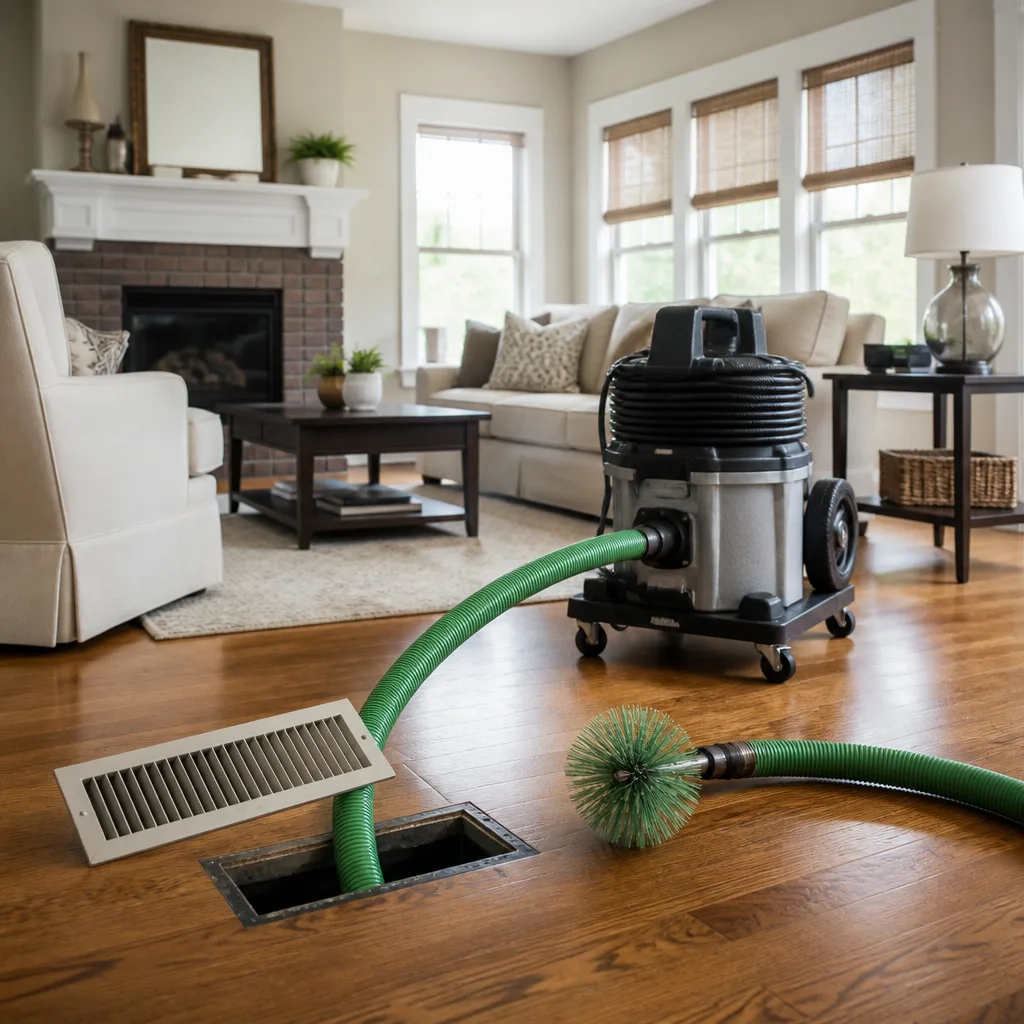
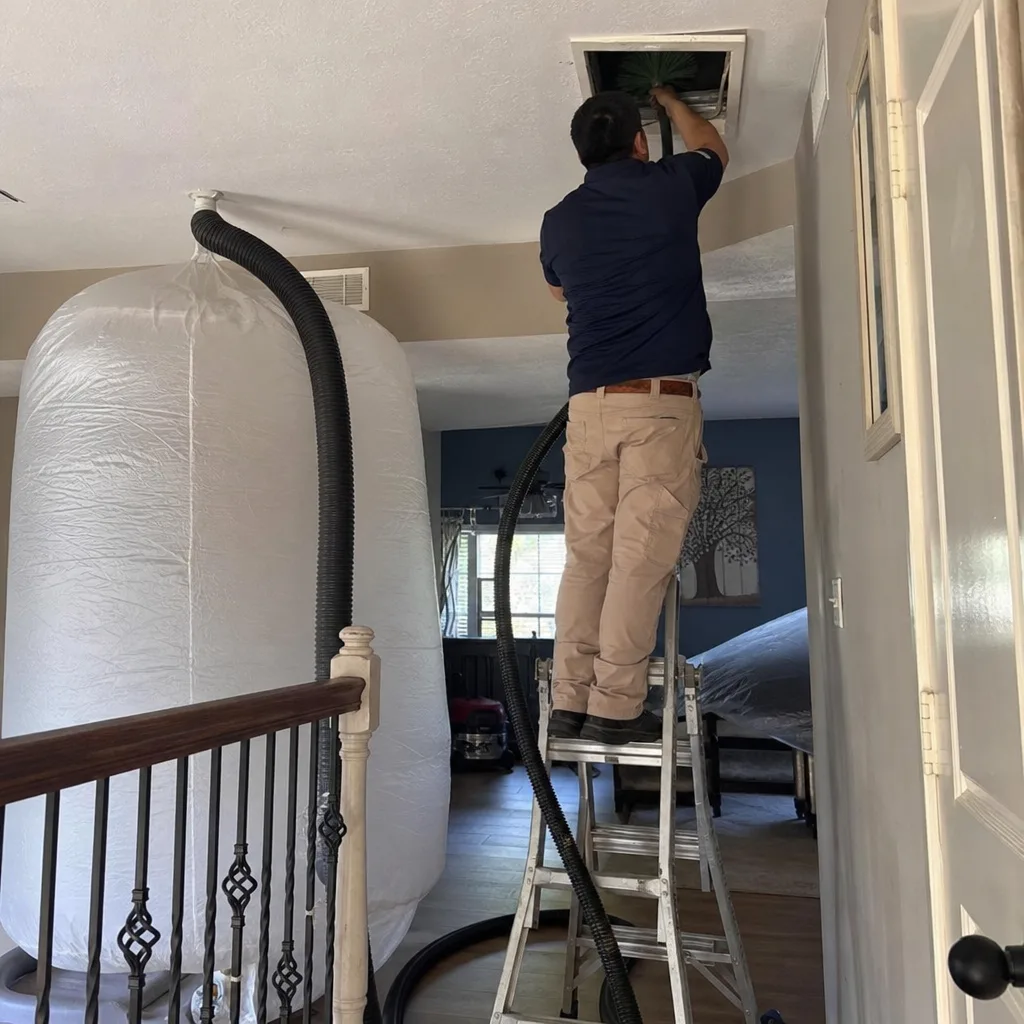
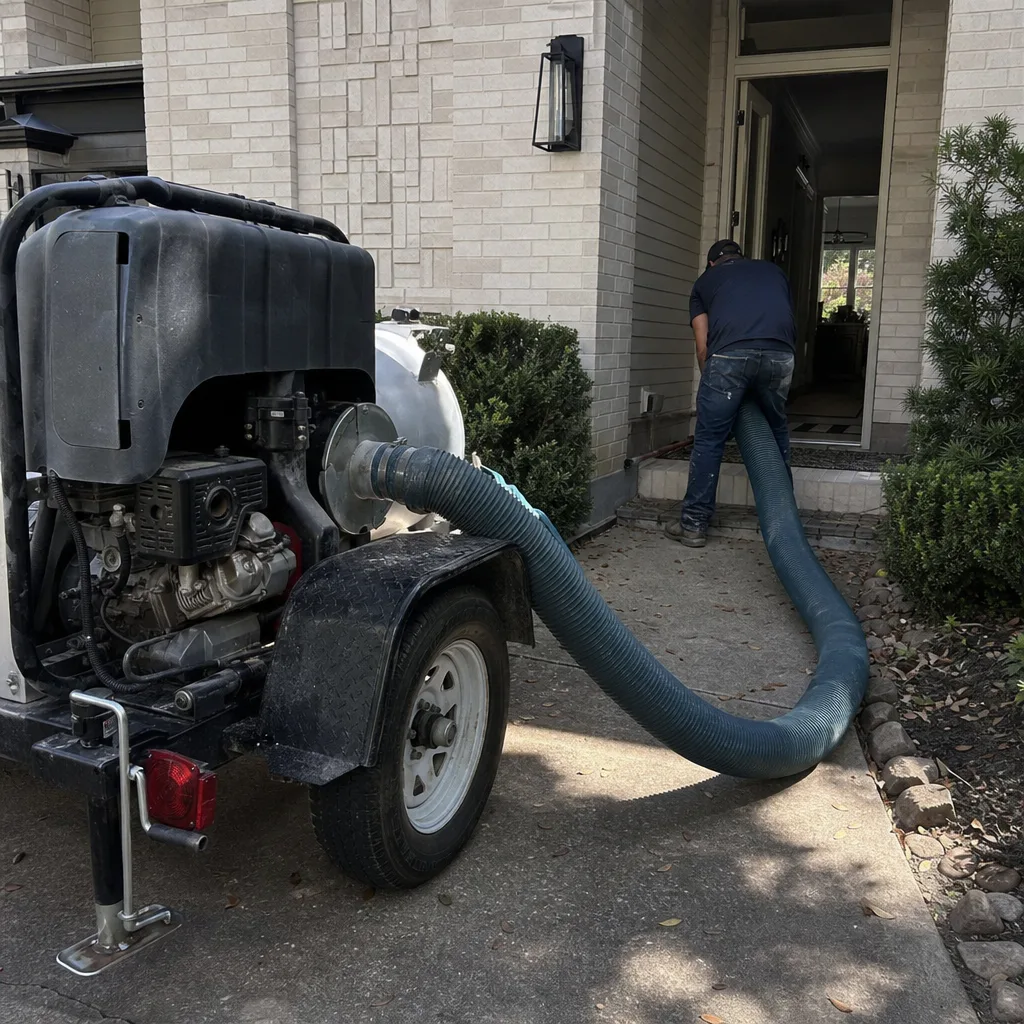
- Hiring based on coupon price without verifying equipment. A Rotobrush or Nikro negative-pressure system with HEPA filtration produces measurably different results than a shop vacuum with a brush attachment. Ask what equipment will be used, then verify the brand independently.
When to Call a Professional
Call for a camera inspection when you observe any of the following: room-to-room temperature differences exceeding 3°F during normal operation, any odor that appears with system startup and persists beyond one week, filter loading faster than every 60 days without an obvious cause like construction nearby, or visible moisture staining at any register boot. These signs indicate conditions that DIY maintenance cannot address and that worsen with delay.
Call immediately for any chemical, solvent, or sulfur odor, or if you suspect gas leak or refrigerant release. These are safety hazards, not maintenance issues.
CleanRun Air Duct Cleaning The Woodlands offers free estimates in The Woodlands. Every estimate includes a written price before any work begins, under Haven Standard Clause 1, and every inspection includes a documented photo record of what the camera finds inside your duct runs. If you’ve received a written estimate from another company, we provide a Free Second Opinion at no cost, with our number written next to theirs so you can compare scope and equipment directly. Call (346) 248-1474.
Frequently Asked Questions
Whole-system air duct cleaning for a typical 2,000-3,500 square foot home in The Woodlands runs $450-$850, depending on the number of duct runs, the accessibility of the plenum, and whether repair or sealing is needed. CleanRun delivers a written price before any work starts, every time, under Haven Standard Clause 1. We do not quote per-vent prices or advertise teaser rates that change once the truck arrives. Call (346) 248-1474 for an exact quote on your home - estimates are free.
The $79-$149 coupon prices you see advertised typically cover a brief vacuuming of accessible register faces, not full-system cleaning with negative-pressure extraction. The invoice often expands once the technician is in your home. A legitimate whole-system cleaning requires 3-5 hours, professional-grade equipment like Rotobrush or Abatement Technologies negative-pressure systems, and HEPA filtration. Ask any company to specify in writing exactly which duct runs will be cleaned, what equipment will be used, and whether the price is final before work begins.
Demand a documented photo record of every duct run, before and after. CleanRun has delivered this on every job since 2013 - it’s included as a standard deliverable, not an add-on. If a company cannot or will not show you the inside of your ducts with a camera, you have no verification that the work occurred. The photo record is your proof of scope completion.
For most The Woodlands homes, every 3-5 years under normal occupancy and with proper filter maintenance. Homes with pets, recent construction, or residents with respiratory sensitivities may need more frequent service. The more reliable indicator is the warning signs in this guide: if you’re observing differential temperature, accelerated filter loading, or startup odors, the interval has shortened for your specific home regardless of calendar time.
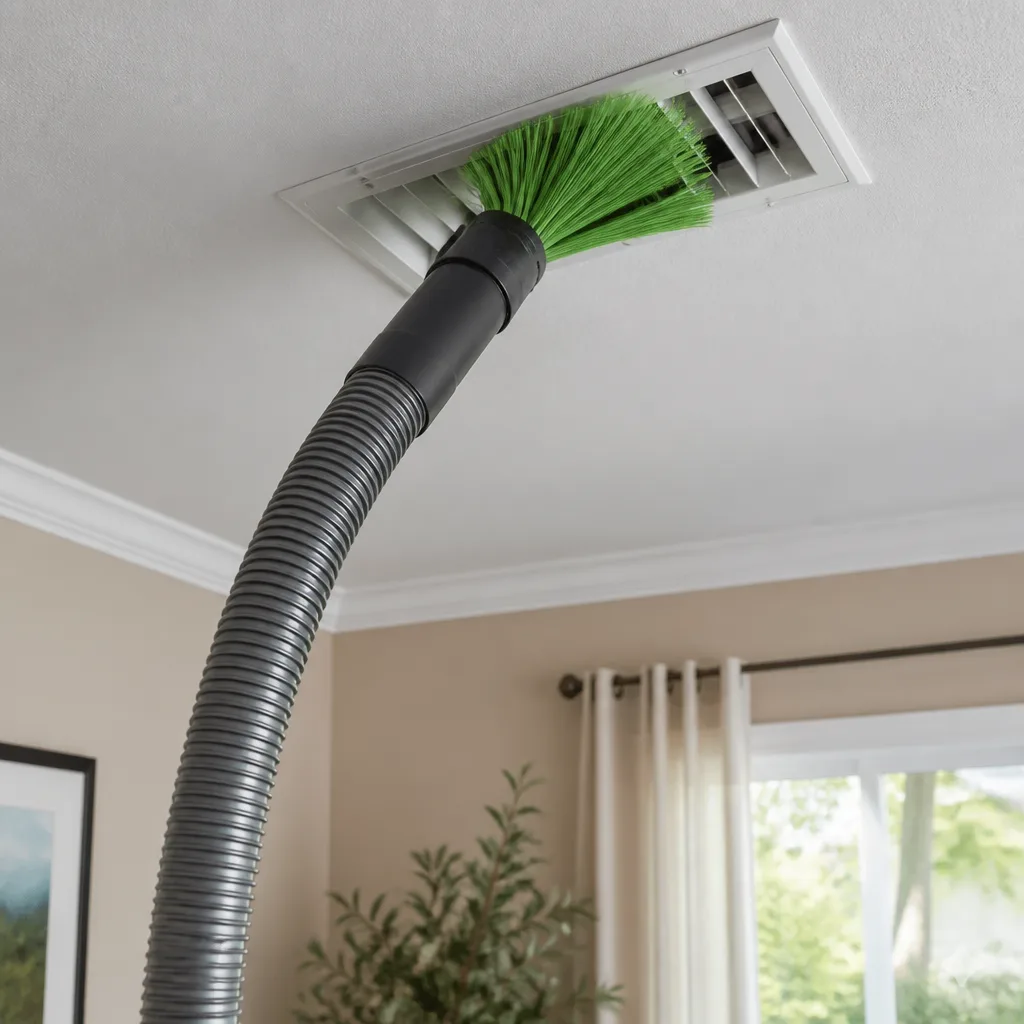
Consumer-grade vacuums and brush kits cannot generate the negative pressure required to dislodge adhered debris from duct interiors or reach past the first few feet of each run. More importantly, disturbing debris without proper containment and HEPA filtration can redistribute particulate throughout your home. We recommend professional service with documented equipment and methods.
Air duct cleaning addresses the supply and return ductwork, the passages that distribute conditioned air. Air Duct Cleaning in The Woodlands focuses on these passages. HVAC cleaning addresses the blower assembly, evaporator coil, and heat exchanger, the components that condition the air. The warning signs differ: startup-only odors usually indicate HVAC components, while continuous odors or differential airflow indicate ductwork. CleanRun offers both services and will recommend the correct scope based on what your signs indicate, not a predetermined package.
The Bottom Line
The warning signs that matter most in The Woodlands homes are not the dramatic, visible problems marketed by coupon companies. They’re the subtle, measurable changes in temperature balance, odor timing, and filter performance that indicate duct system degradation before it becomes expensive. Learn to read these signs correctly, act on the triage table above, and verify any professional service with written pricing, documented photo records, and specified equipment. Explore more guides & resources on our blog. The cost of delayed response, a failed blower motor, mold remediation, or unnecessary equipment replacement, far exceeds the cost of early, accurate diagnosis.
Written by Tomas Reyes, Owner at CleanRun Air Duct Cleaning The Woodlands, serving The Woodlands since 2013.