
Last updated September 23, 2026
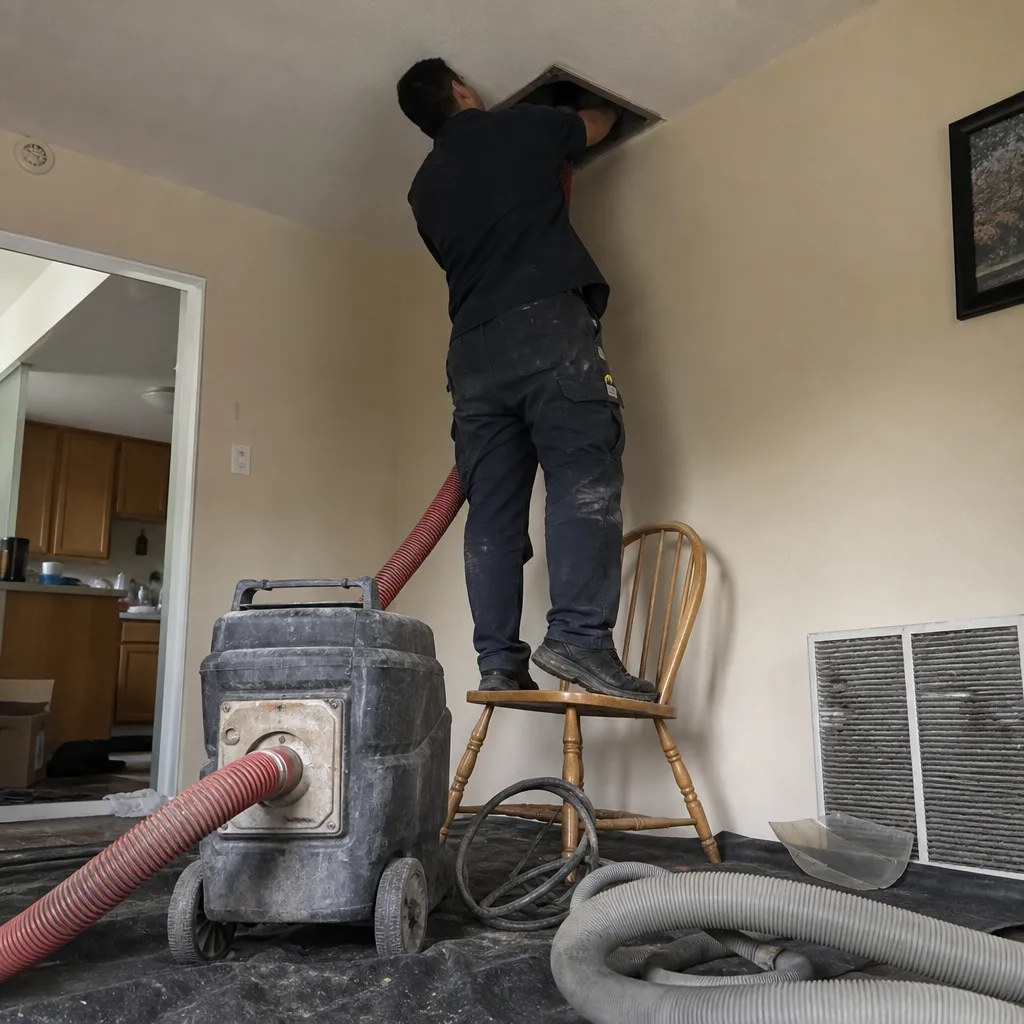
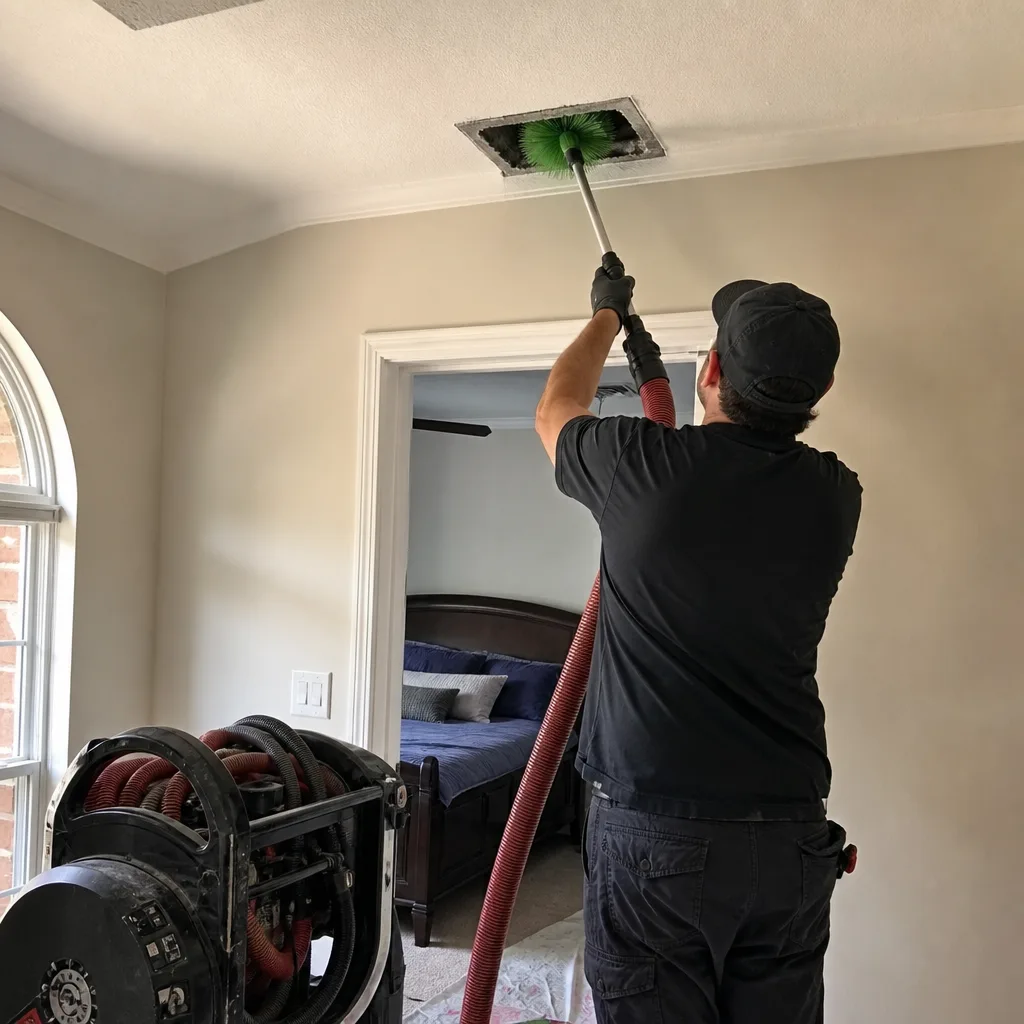
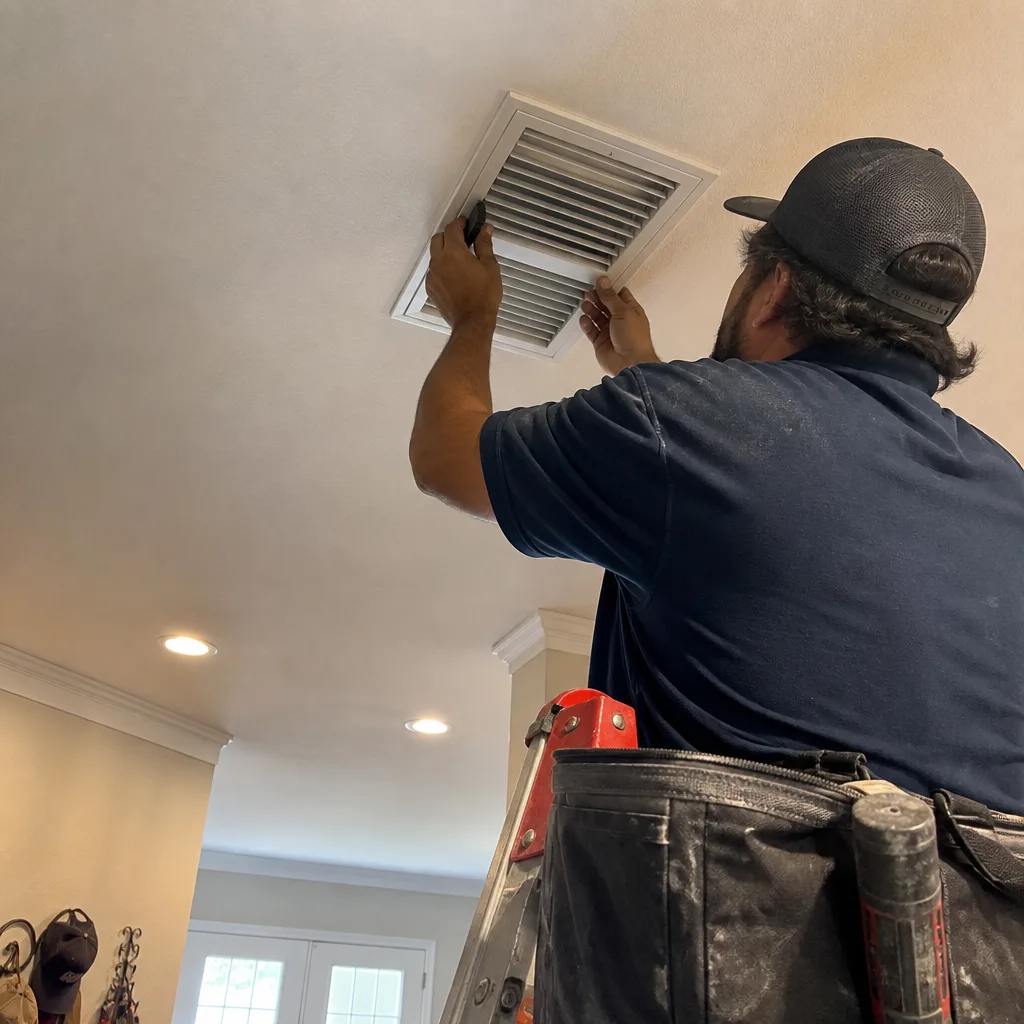
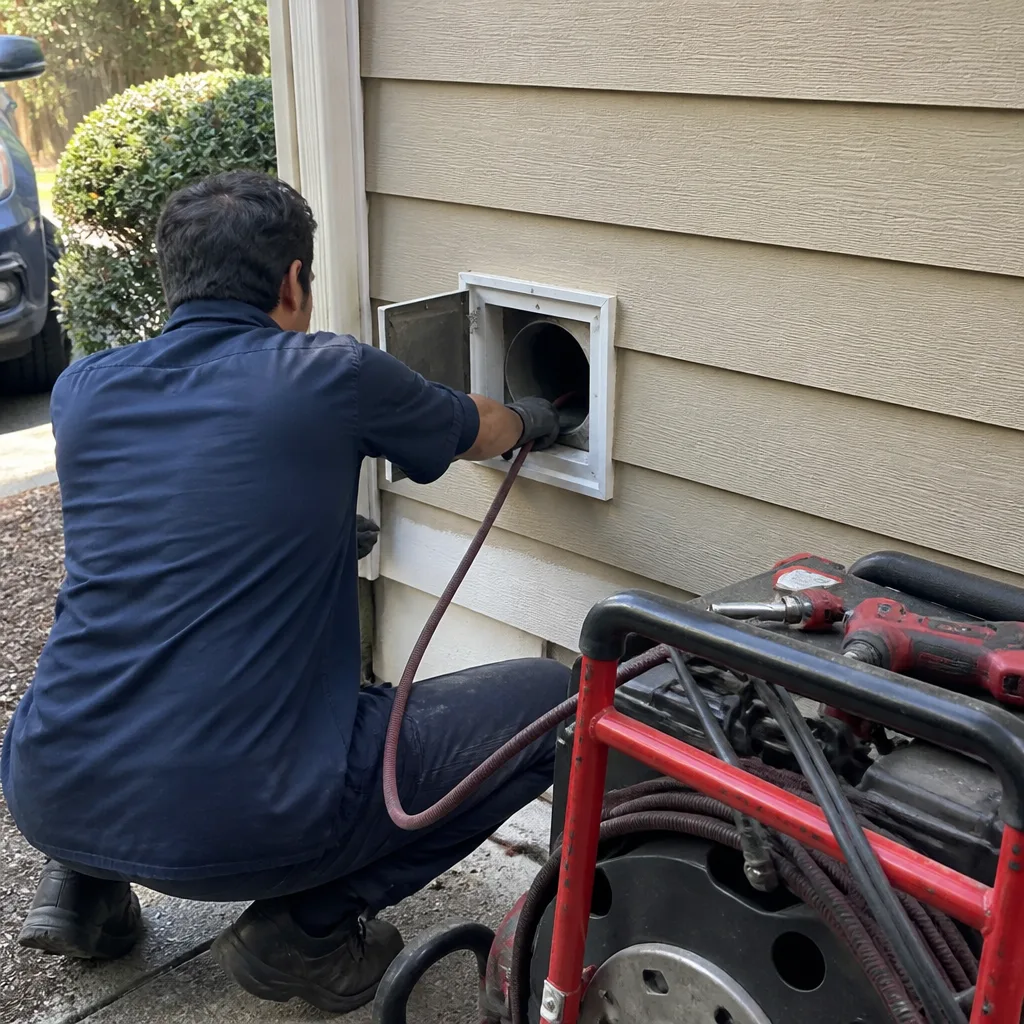
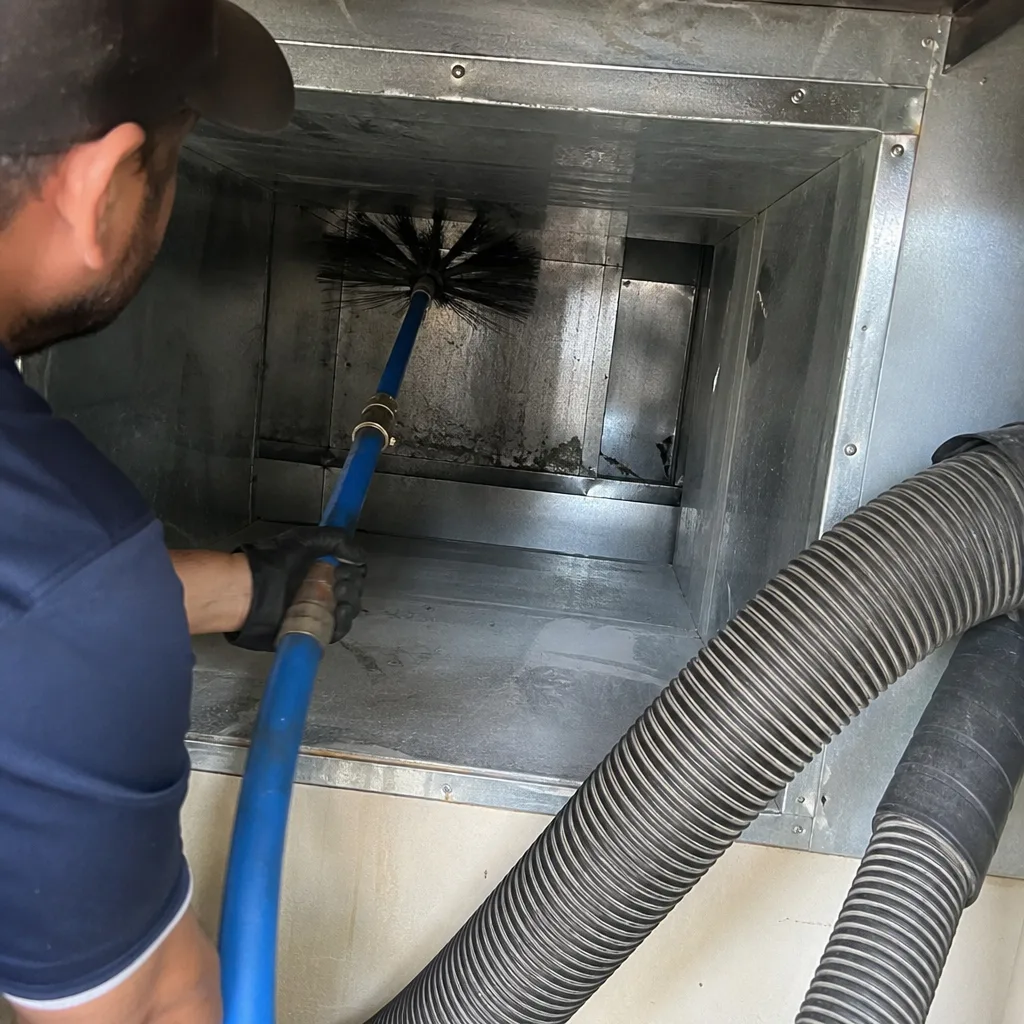
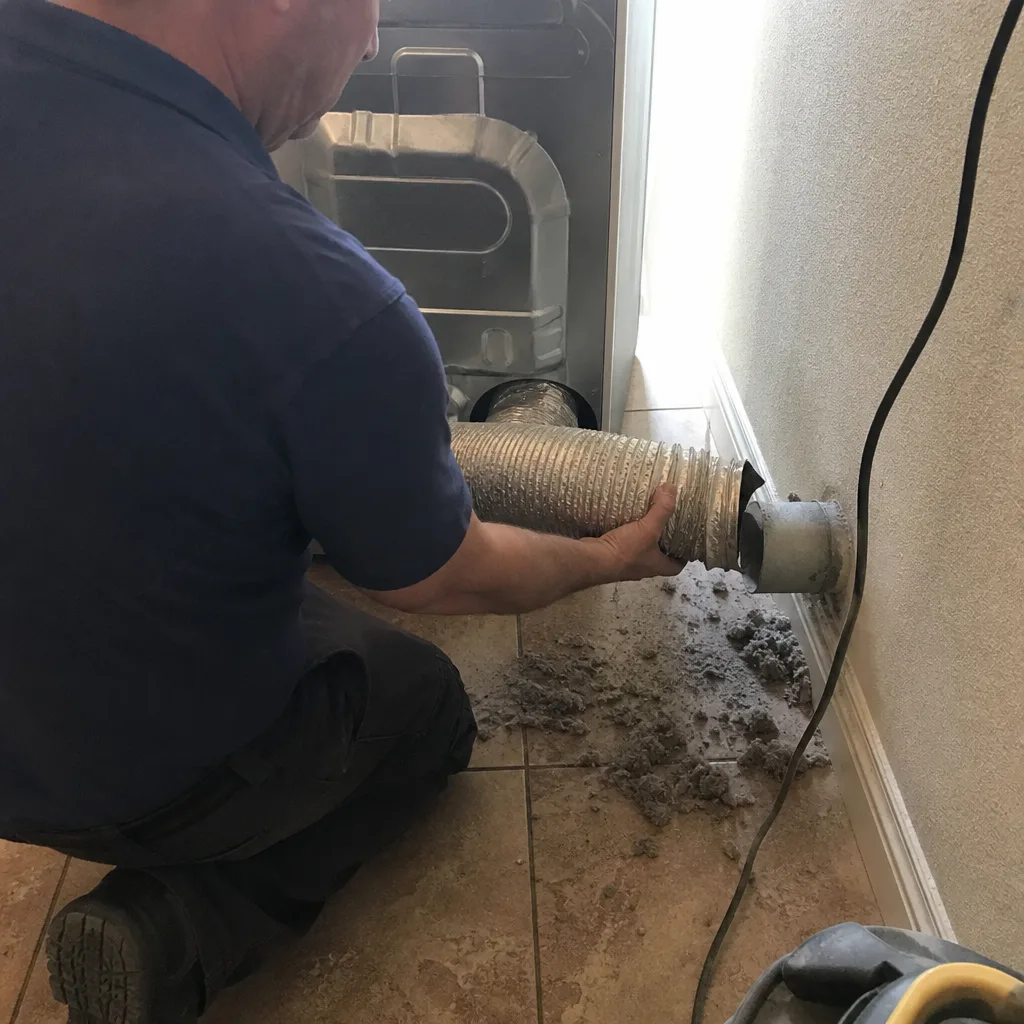
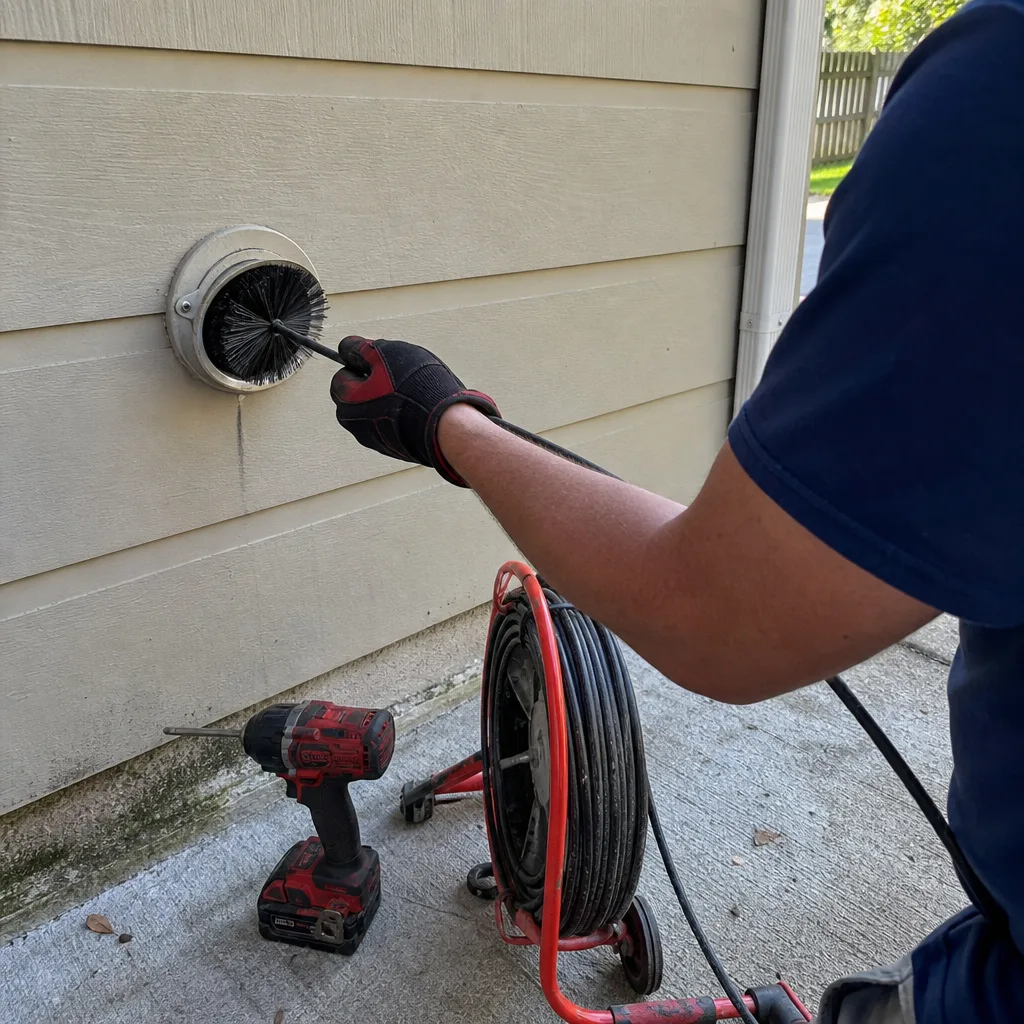
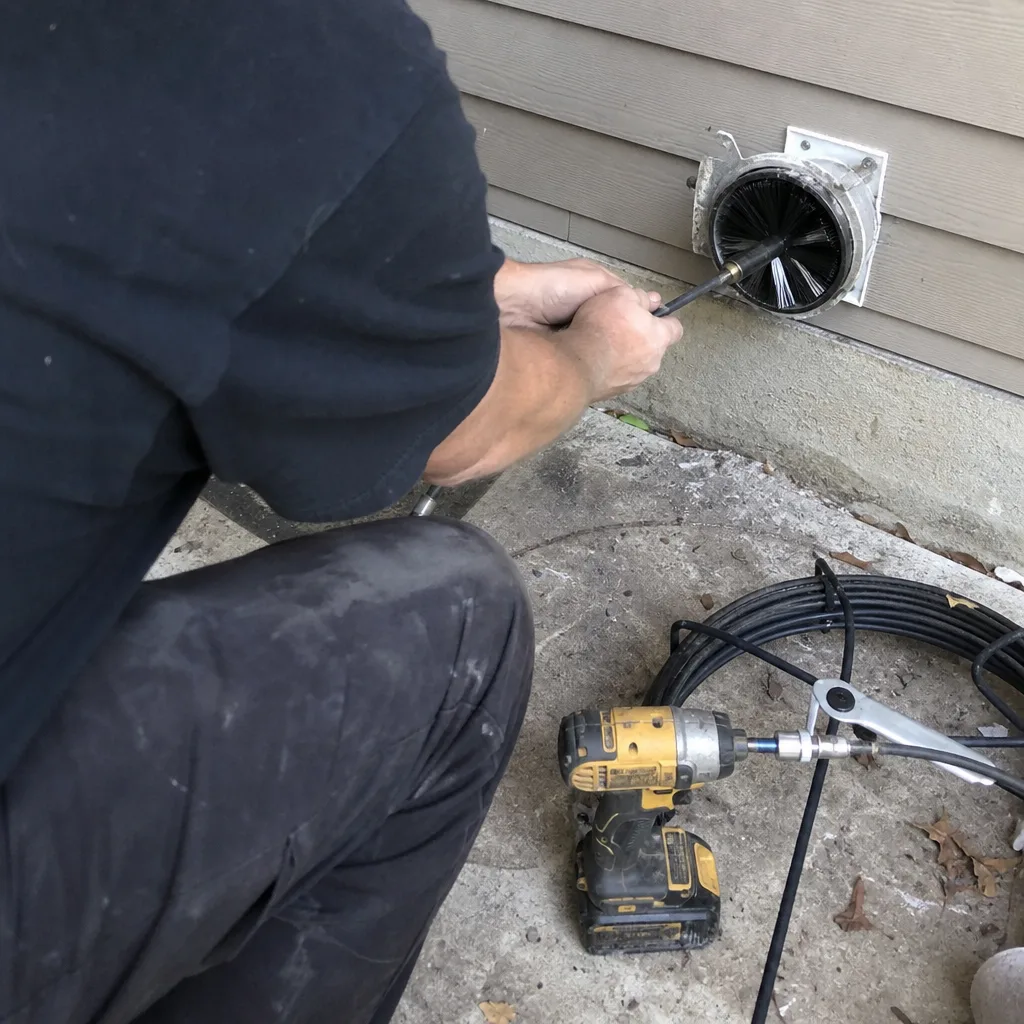
Whole-system duct and dryer vent check with before-and-after photos - you see exactly what came out of your vents
That "$99 whole-house special" is a bait ad - the real number appears once they are in your hallway, or the "clean" is a shop-vac at the register. We photograph the inside of your ducts before and after instead.
 Before
 After
After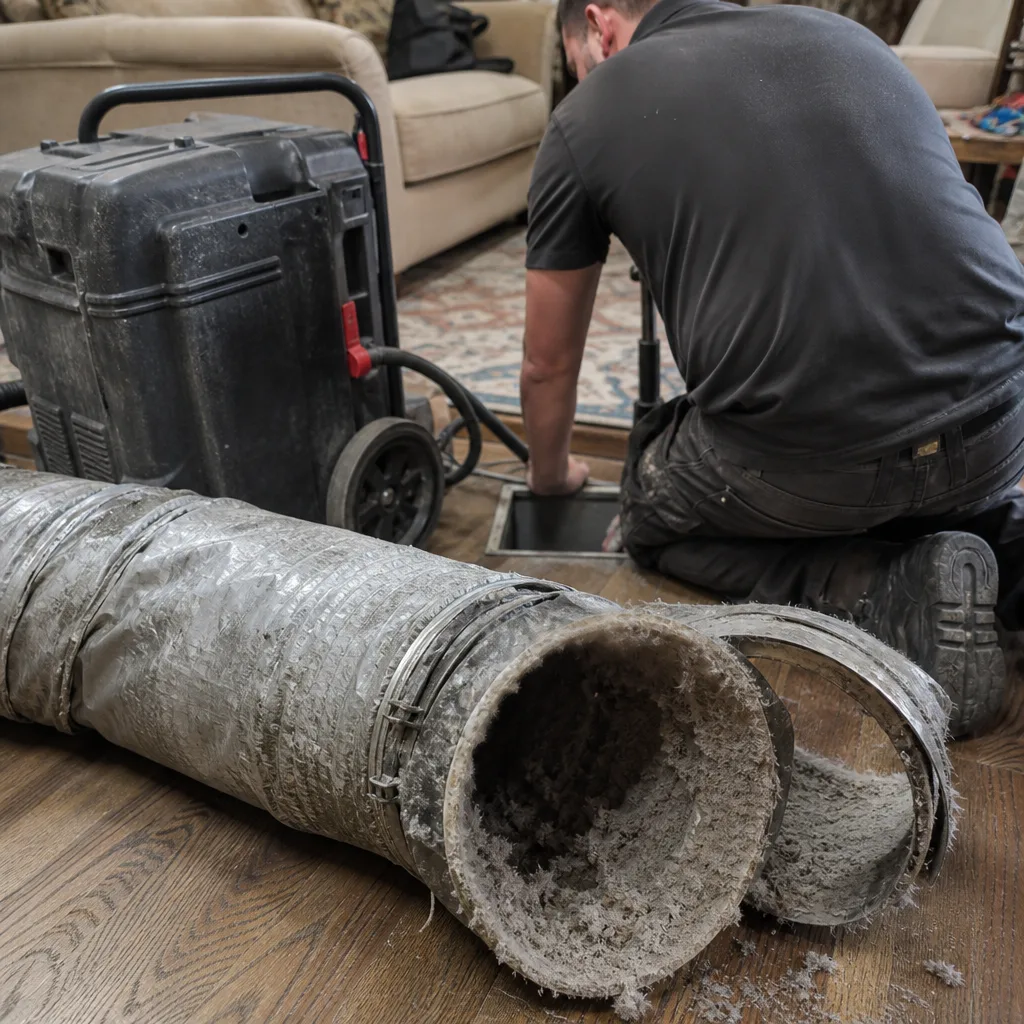 Before
 After
After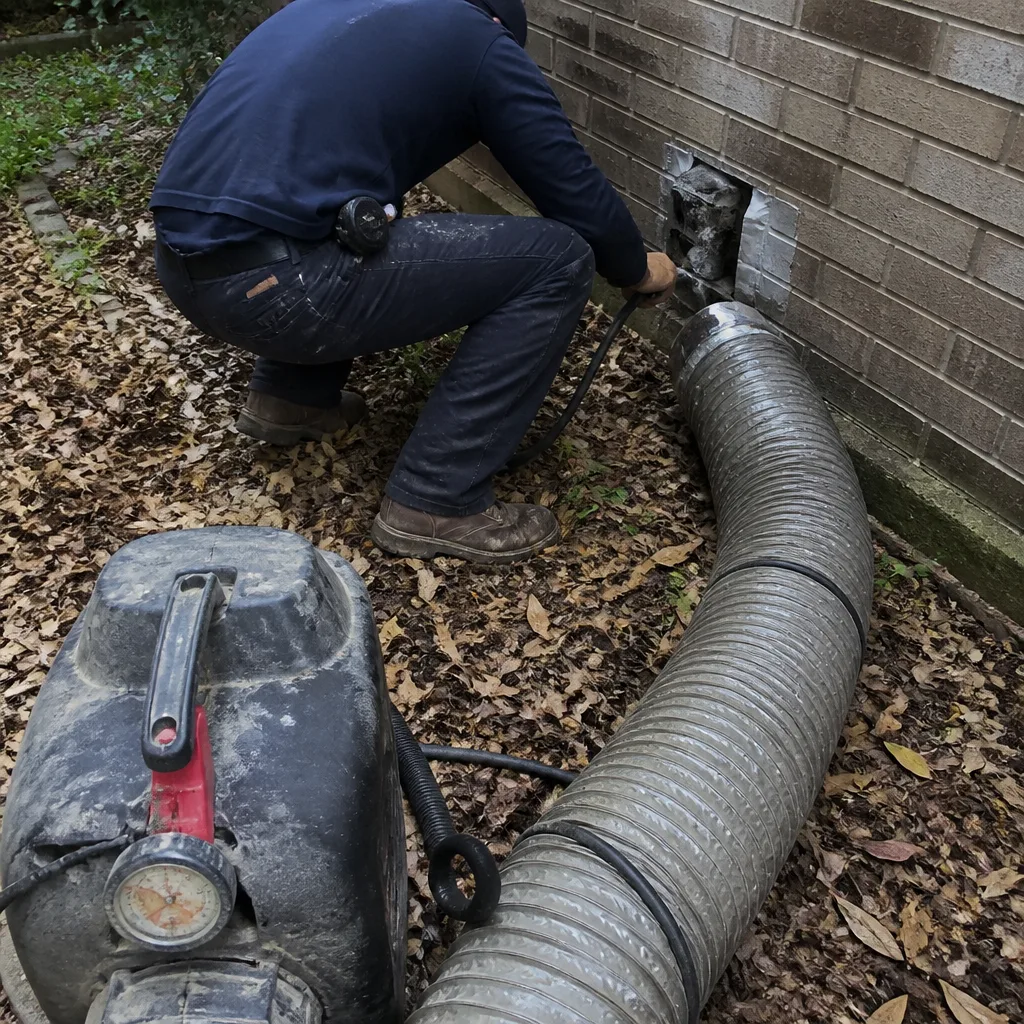 Before
 After
AfterSeasonal Air Duct Cleaning Care for The Woodlands: Year-Round Homeowner’s Guide
In February and March, The Woodlands produces some of the highest oak pollen counts in North America. Most of that pollen is pulled through your return air system and compacted into the first three feet of your main trunk line before allergy season ends. What homeowners here miss is that each season deposits a different contaminant and stresses a different part of the duct system. Spring packs pollen into returns. Summer attic heat above 130°F sags flex duct into debris traps. Hurricane-season humidity backs up condensation lines into duct liner. Hard freezes contract metal collars and pull them apart from flex duct, pumping unfiltered attic air into bedrooms. This guide maps what actually happens inside your ducts through a Woodlands year, what you can observe yourself, and when documented professional work is the right call.
Quick Answer
Seasonal air duct cleaning in The Woodlands should follow a four-event calendar: deep return cleaning after oak pollen season (April), flex duct inspection after peak attic heat (September), condensation and liner check after hurricane season (November), and post-freeze collar inspection after any hard freeze (January-February). A whole-system cleaning with negative-pressure extraction and a documented photo record typically runs $450-$850 for a 2,000-square-foot home in The Woodlands, depending on duct complexity and accessibility.
Table of Contents
- Spring: Oak Pollen Compaction in Return Lines
- Summer: Attic Heat and Flex Duct Sag
- Hurricane Season: Condensation, Humidity, and Duct Liner
- Winter: Freeze Cycles and Collar Separation
- Month-by-Month Homeowner Action Calendar
- The Correct Filter Upgrade Sequence for Spring
- Fall Pre-Season Checklist Before First Heat
- Common Mistakes to Avoid
- When to Call a Professional
- Frequently Asked Questions
BeforeAfterSpring: Oak Pollen Compaction in Return Lines
The Woodlands sits in a coastal oak-hickory forest where live oak, water oak, and laurel oak release pollen from late January through early April. In spring 2023, Houston-area pollen counters recorded 8,000-12,000 grains per cubic meter during peak weeks. Your HVAC system’s return grille acts as a passive air sampler, pulling that pollen through the filter and into the duct network.
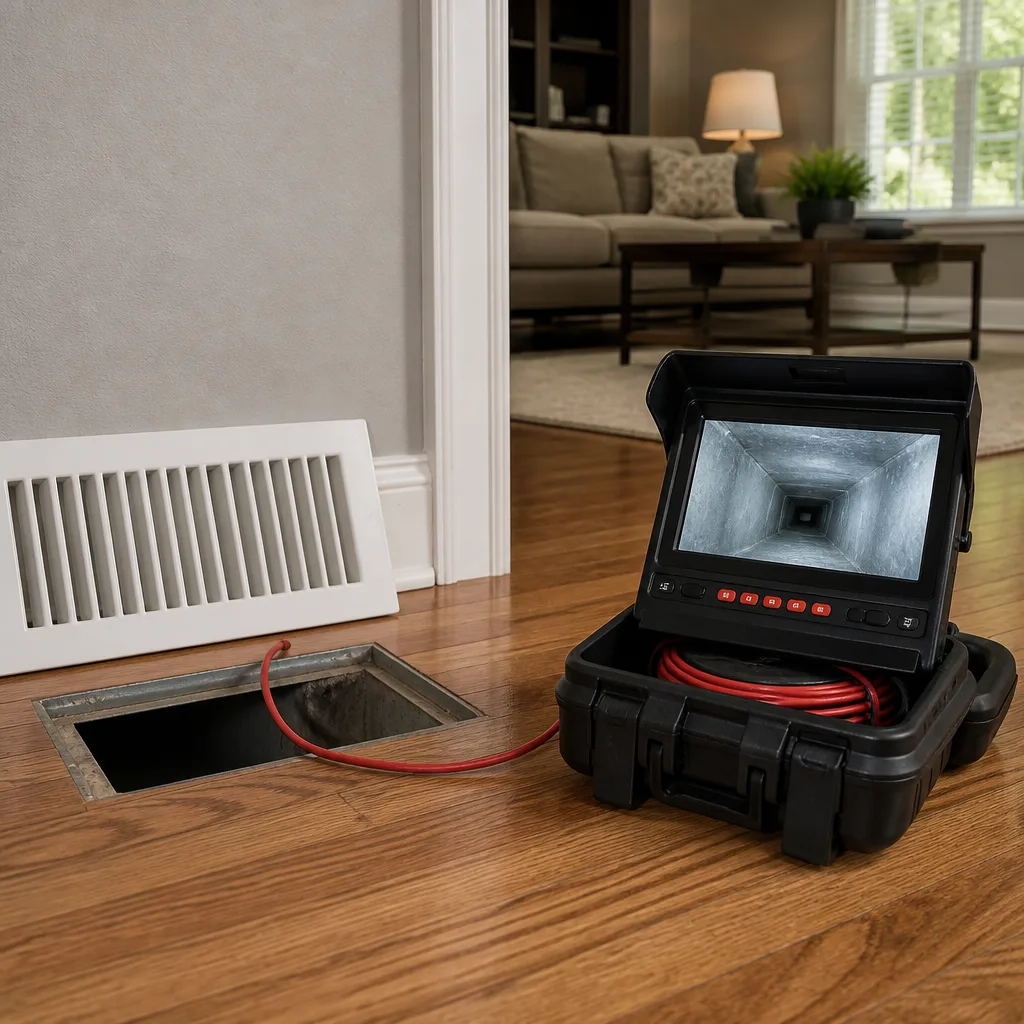
Here’s what we find when we camera the first three feet of return trunk lines in April and May: a dense, felt-like mat of pollen and skin-cell dust compacted at the first elbow or transition. The pollen is sticky. It adheres to sheet metal, then traps subsequent layers. Standard 1-inch fiberglass filters catch the largest particles, but sub-10-micron pollen fragments pass through and agglomerate in low-velocity zones. By mid-March, a return line that measured clean in January can show a quarter-inch buildup.
The health impact is localized to the master bedroom and primary living areas, which typically sit on the main return branch. Homeowners report waking with congestion that clears when they leave the house. The cause is not ambient outdoor pollen at that point; it’s recirculation from the duct reservoir.
What to check yourself in March:
- Remove the return grille and shine a flashlight into the first straight section. Look for yellow-green film on the duct floor.
- Check your filter every 10 days during peak pollen. A filter that was white on install and is gray-green in two weeks is overloaded.
- Run your system fan-only for 10 minutes, then smell at the supply register. A musty, sweet pollen odor indicates buildup downstream.
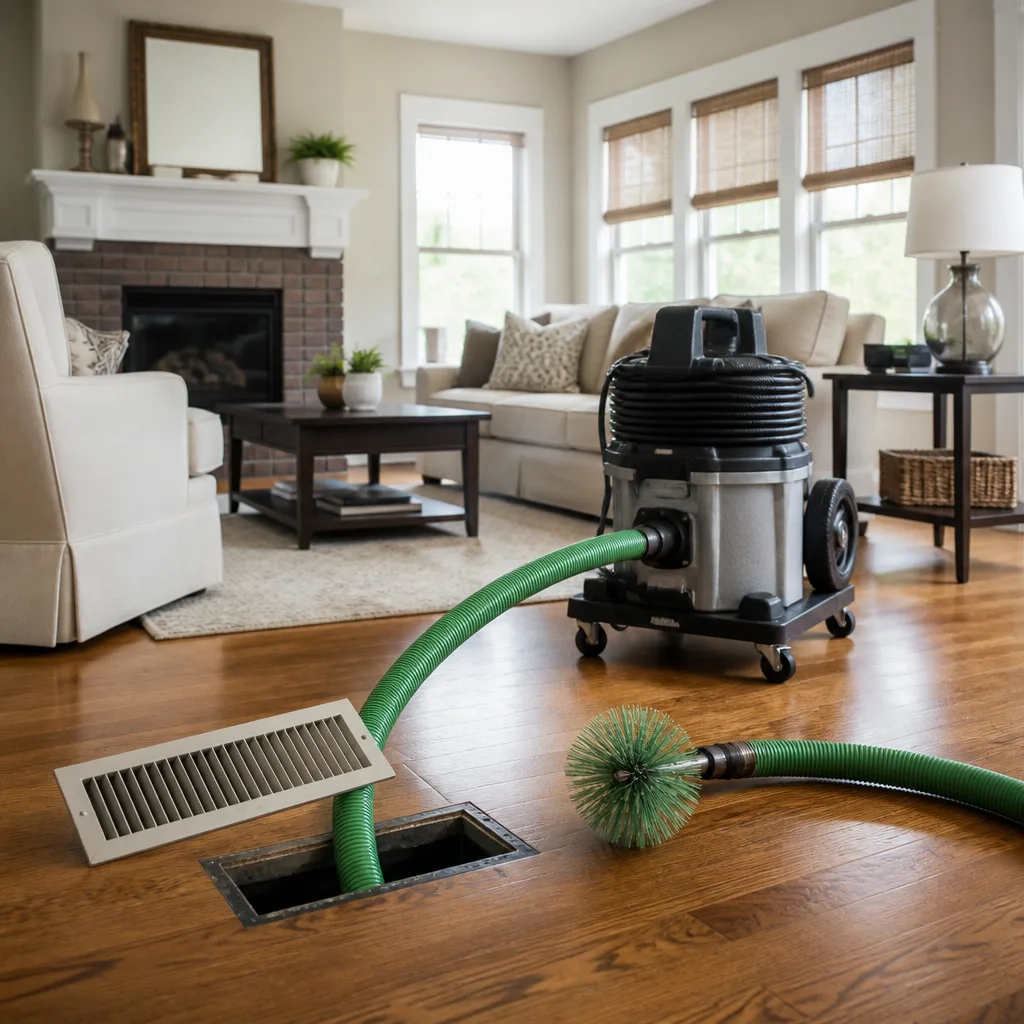
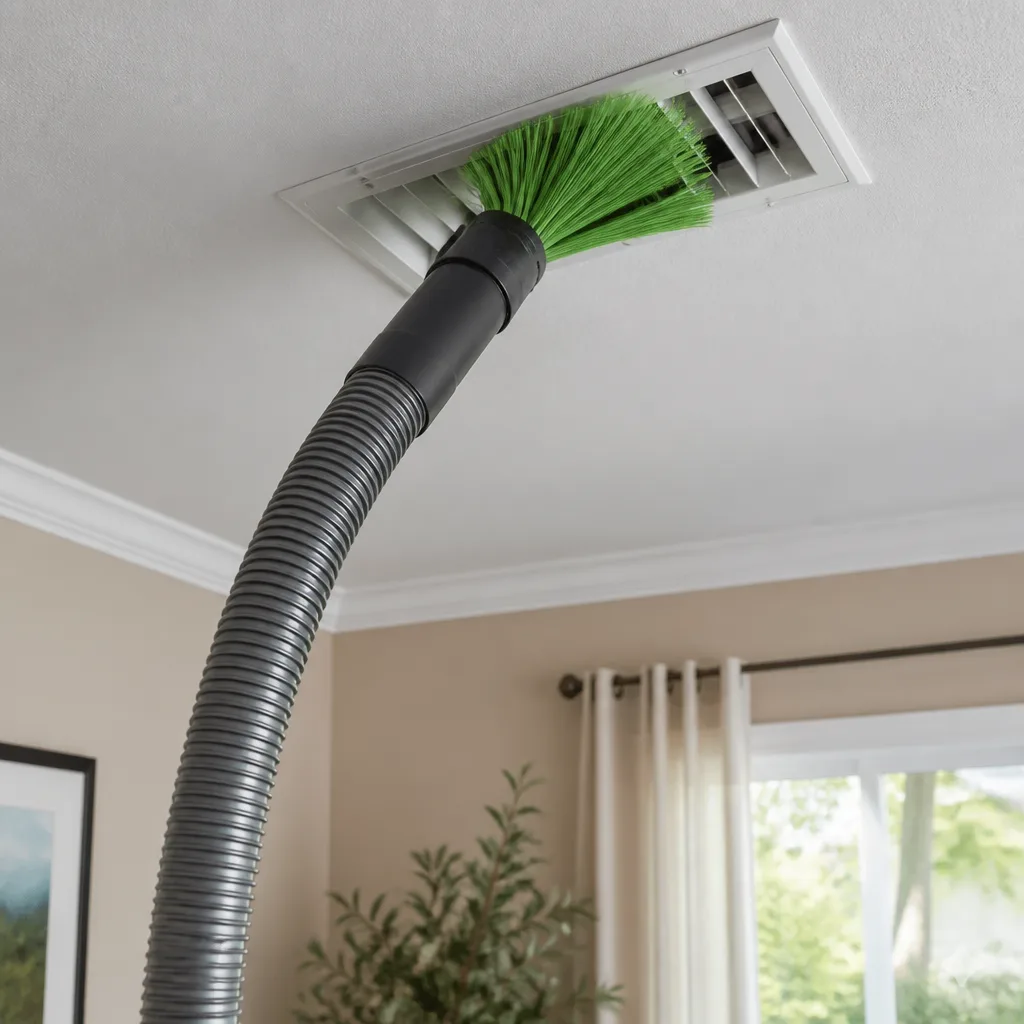
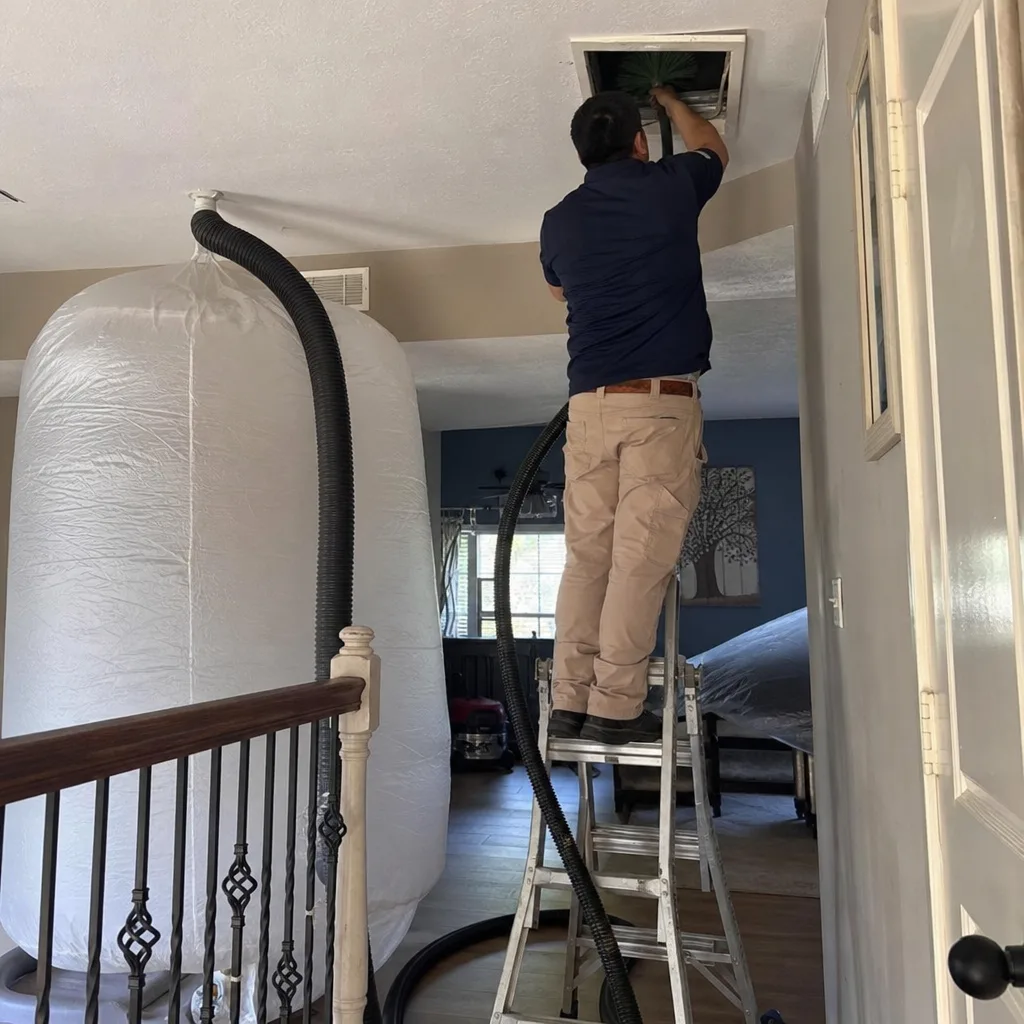
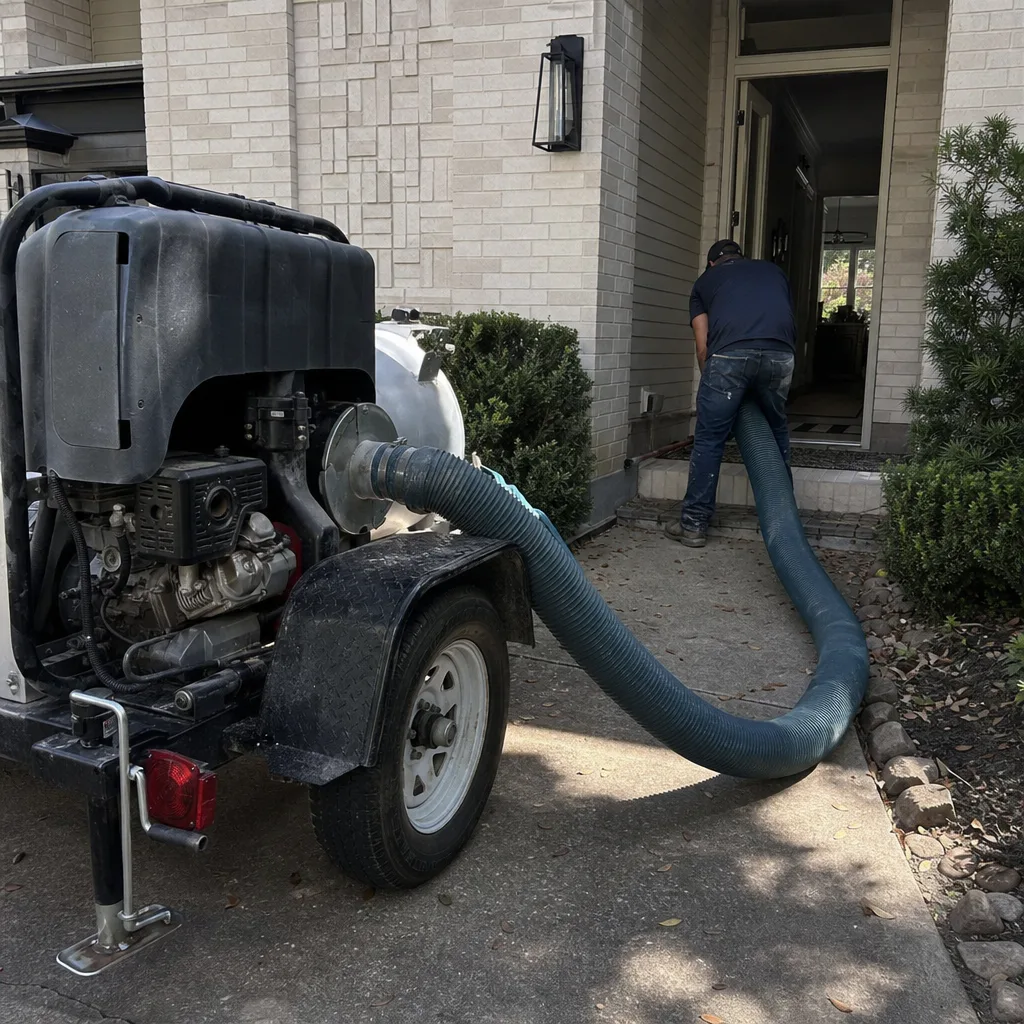
Professional spring service should include negative-pressure extraction through the return trunk, not just register vacuuming. The equipment that matters here is a high-volume negative-air machine, such as those from Abatement Technologies, coupled with rotary brush agitation through the main lines. A shop vac with a 2.5-inch hose cannot generate the airflow to lift compacted pollen from a 14-inch return trunk.
Our crews in The Woodlands document this season specifically. The photo record from spring jobs typically shows the yellow-green mat at the return elbow, then the same view after extraction. Customers receive those images as part of the standard job record. Air Duct Cleaning in The Woodlands during April and May addresses pollen compaction before it becomes a summer mold substrate.
Summer: Attic Heat and Flex Duct Sag
Attic temperatures in The Woodlands regularly exceed 130°F from June through September. Flex duct, the insulated flexible tubing used in most homes built 1995-2020, has a rated maximum of 180°F at the jacket surface, but the internal liner degrades faster with sustained heat cycling. More immediately: heat softens the wire helix that gives flex duct its shape, and gravity does the rest.
Sag creates three problems. First, low points become debris traps. Dust and pollen that would otherwise transit through the duct settle in the belly of the sag. Second, the inner liner can tear at the stress point where sag tension concentrates. Third, and most specific to The Woodlands, sagging flex duct often contacts blown cellulose or fiberglass insulation, which then wicks moisture during humidity spikes and holds it against the duct surface.
We see this pattern repeatedly in neighborhoods like Panther Creek and Sterling Ridge, where homes built in the 2003-2012 range have original flex duct in vented attics. The camera shows a 3-inch debris build-up at the first elbow, then a second accumulation at a mid-run sag point 20 feet downstream. The debris is not just dust; it’s pollen from March, now desiccated and compressed by summer airflow, often with mold spotting where humidity has penetrated the liner tear.
Summer inspection points:
- Listen for whistling at supply registers. A sag that partially collapses the duct reduces airflow and raises velocity at the register, creating noise.
- Check rooms at the end of long duct runs for weak airflow in July and August. A 15% sag can reduce delivered air volume by 30%.
- Look for water stains on ceiling drywall below attic duct runs. This is not roof leak; it’s condensation on the cold duct surface where insulation has compressed or separated at the sag point.
Correcting sag requires more than cleaning. The duct must be re-supported with proper strapping, typically every 4 feet per IRC M1601.4.2, and torn sections replaced. CleanRun crews carry Guardsman-rated flex duct and metal strapping on every summer truck. The photo record includes the sag point, the support installation, and the post-repair airflow verification. HVAC Cleaning in The Woodlands during late summer should include this structural check, not just surface cleaning.
Hurricane Season: Condensation, Humidity, and Duct Liner
Hurricane season in The Woodlands runs June through November, with peak moisture loading in August and September. The threat to ductwork is not flooding in the duct itself, though that occurs in slab-on-grade returns during extreme events. The routine, more insidious damage comes from condensation line backups and sustained humidity above 70% RH in attic spaces.
Your air handler produces condensate at 1-2 gallons per hour during normal operation. That water exits through a PVC drain line, typically to a floor drain or exterior. When algae or debris blocks the line, water backs up into the secondary pan, then overflows into the return plenum, the sheet-metal box that connects your air handler to the duct system. The plenum’s internal insulation, if present, wicks water horizontally into adjacent duct runs. By the time you see water damage, the liner has been wet for days.
Wet duct liner is a mold substrate. Not the cosmetic surface mold that wipes off; the embedded growth that requires liner replacement. The telltale sign is a sharp, musty odor when the system first cycles on, diminishing after a few minutes as your nose adapts. This is not “dirty ducts.” This is active microbial growth in a wet porous material.
Hurricane-season specific checks:
- Inspect your condensate drain line monthly from June through October. Pour a cup of white vinegar through the clean-out port to suppress algae.
- After any tropical storm or extended power outage, remove the air handler access panel and photograph the plenum floor with your phone. Water staining or rust indicates past or current backup.
- Run your system in cooling mode for 30 minutes, then smell at the supply register. A persistent musty odor that does not fade indicates liner contamination, not surface dust.
Professional response to wet liner is not cleaning; it’s replacement of the affected section, with antimicrobial treatment of adjacent metal. CleanRun crews use Aprilaire and Honeywell media in rebuilt plenums where filtration upgrade is appropriate. The documented photo record shows the wet liner, the removed section, and the rebuilt connection. This is structural repair work, and it requires a written scope with line-item pricing before any demolition begins, per Haven Standard Clause 1.
Winter: Freeze Cycles and Collar Separation
The Woodlands experienced hard freezes in February 2021 and December 2022, with temperatures below 15°F. These events are infrequent but mechanically consequential. Metal duct collars, the connecting rings between flex duct and supply plenums or register boots, contract in cold. Flex duct, made of polyester and vinyl, contracts less. The differential movement pulls the flex duct off the collar barb, or tears the inner liner at the clamp point.
The result is unfiltered attic air infiltration. Your blower pulls 1,200-2,000 cubic feet per minute. A 1-inch gap at a collar connection creates a pressure imbalance that draws attic air, with its load of insulation particles, rodent debris, and humidity, directly into your supply system. Homeowners notice this first as dust accumulation on furniture near the affected register, or as a temperature imbalance between rooms.
Post-freeze inspection protocol:
- After any night below 25°F, run your hand around each ceiling register with the system on. A draft from the gap between register and drywall, or irregular temperature, suggests upstream leakage.
- Check your filter two weeks after a freeze. Unusually rapid loading indicates the system is filtering attic air, not recirculating indoor air.
- Listen for new duct noise. A separated collar often creates a low rumble or flutter as air escapes into the attic space.
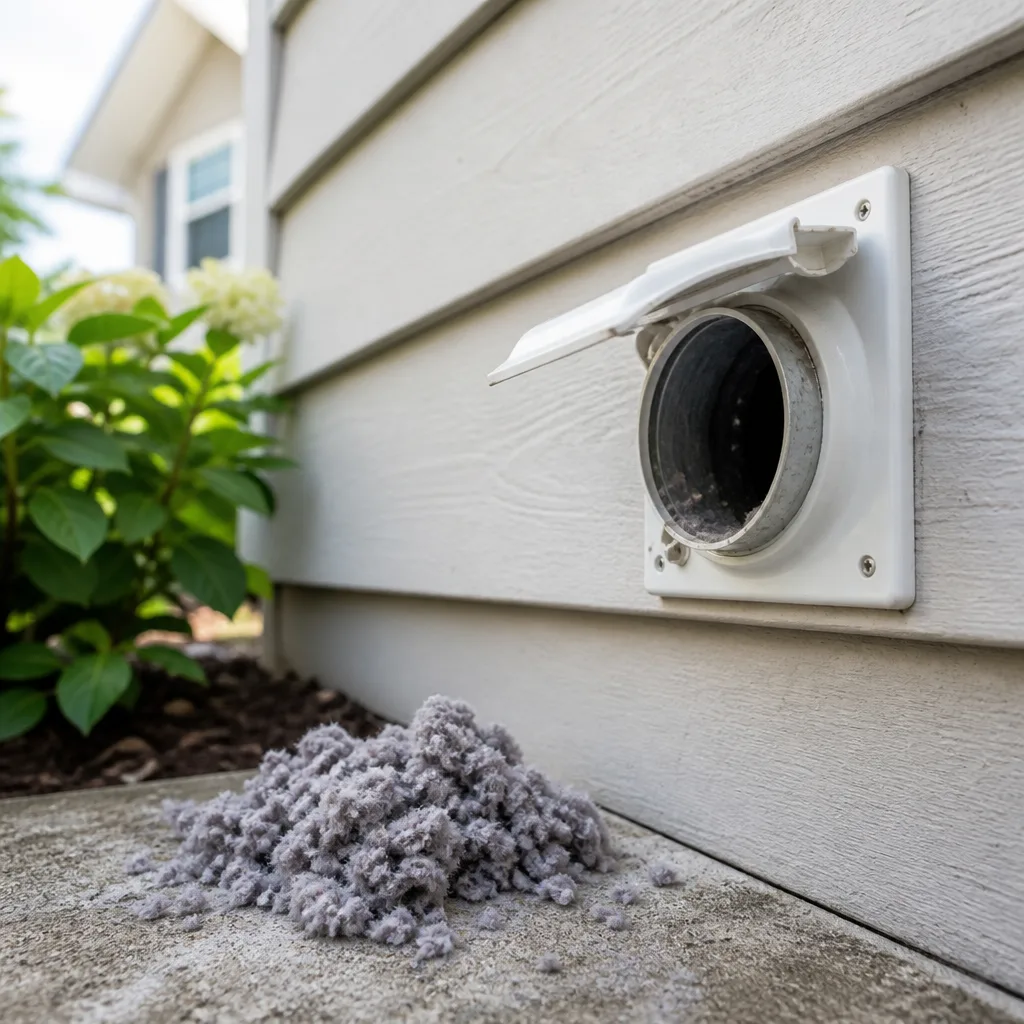
Collar separation is not a DIY repair. The attic work involves navigating trusses, working near electrical, and resealing with mastic rated for the temperature range. CleanRun crews verify collar integrity with a smoke pencil test after any freeze-season call. The photo record includes the separated connection, the repair, and the post-repair smoke test showing no leakage. This is why Dryer Vent Cleaning in The Woodlands and duct inspection are often scheduled together in January: both involve attic access, and both benefit from post-freeze verification.
Month-by-Month Homeowner Action Calendar
The following calendar is specific to The Woodlands climate pattern and housing stock. It assumes a standard split-system HVAC with attic ductwork, which describes approximately 85% of homes in neighborhoods from Alden Bridge to Creekside Park.
January
Post-freeze collar check. Run system and inspect registers for drafts or temperature variation. Schedule professional inspection if any freeze occurred below 25°F.
February
Pollen pre-season. Verify filter fit (no bypass around edges). Order replacement filters for March-April; standard retail stock sells out during first pollen surge.
March
Peak pollen. Inspect return grille and first duct section every 10 days. Do not upgrade filter MERV without static pressure check (see next section).
April
Post-pollen deep cleaning window. Schedule negative-pressure extraction of return trunk and main lines. This is the highest-impact cleaning of the year.
May
System efficiency check. Note cooling recovery time after peak afternoon heat. Slow recovery suggests duct leakage or blockage from spring debris.
June
Hurricane season begins. Clear condensate drain line. Inspect attic access for new daylight gaps that could admit wind-driven rain.
July
Mid-summer flex duct check. Verify strong airflow at all registers. Note any new whistling or weak rooms.
August
Peak humidity month. Monitor for musty odors at startup. Check secondary drain pan for standing water.
September
Post-heat flex duct inspection. Professional camera inspection of attic runs for sag, liner tear, or insulation contact.
October
Transition month. Replace filter before heating season. Verify humidifier, if present, is clean and functional.
November
Post-hurricane season. Inspect plenum and return for moisture staining. Schedule liner replacement if any musty odor persists.
December
Pre-freeze preparation. Verify attic insulation coverage over ductwork. Seal any visible gaps at chase penetrations.
The Correct Filter Upgrade Sequence for Spring
The Woodlands pollen load drives many homeowners to buy the highest-MERV filter available, typically MERV 13 pleated media. This is often a mistake. MERV measures particle capture efficiency, not system compatibility. A denser filter raises static pressure, the resistance your blower must overcome. Standard residential blowers are rated for 0.5 inches water column external static pressure. A MERV 13 filter in a system designed for MERV 8 can add 0.3-0.4 inches, pushing the total load beyond the motor’s capacity.
Consequences include reduced airflow (longer cooling cycles, uneven temperatures), blower motor overheating, and in extreme cases, premature motor failure. The filter is cleaner; the system is worse.
Correct upgrade sequence:
- Check your system’s rated external static pressure. This is on the air handler nameplate or in the installation manual.
- Measure current static pressure with a manometer, or have it measured during any professional service call. CleanRun crews record this on every visit.
- If current total external static is below 0.3 inches, a MERV 11 upgrade is typically safe. If below 0.2 inches, MERV 13 may be acceptable with a 4-inch media cabinet rather than a 1-inch slot.
- If static pressure is already near 0.5 inches, improve filtration through bypass elimination (sealing filter rack gaps) and duct sealing before upgrading media density.
- Never stack a 1-inch MERV 13 on top of an existing 1-inch fiberglass filter. This doubles pressure drop and risks blower damage.
Equipment matters here. Aprilaire and Honeywell both manufacture 4-inch and 5-inch media cabinets with MERV 13 cartridges designed for lower pressure drop than 1-inch pleated equivalents. These require professional installation but are the correct solution for high-pollen markets like The Woodlands. The photo record from a filter upgrade visit includes the static pressure reading, the installed cabinet, and the sealed filter rack.
Fall Pre-Season Checklist Before First Heat
The first heating cycle of the year in The Woodlands is the most likely time for a visible dust event. Here’s why: your duct system has been in cooling mode since April. Dust, skin cells, and pollen have settled in supply lines during the low-airflow months of May and September, when cooling demand is intermittent. The first heat run, typically a 10-15 minute cycle on a 45°F morning in November or December, creates thermal expansion that dislodges settled material. It also runs air in the opposite direction through some duct configurations, stirring debris that cooling airflow left undisturbed.
Homeowners call us in November with the same report: “The house filled with dust when the heat came on.” What they observed was not a sudden duct failure; it was the first forced airflow through a settled debris layer.
Pre-heat checklist:
- Replace the filter before the first heating cycle, even if the current filter looks clean. Summer humidity can load a filter with moisture and mold spores not visible as dirt.
- Run the system in fan-only mode for 30 minutes before switching to heat. This circulates air without the thermal shock that dislodges debris.
- Inspect all supply registers after the first heat cycle. Heavy dust on the register face or nearby wall indicates upstream accumulation.
- Smell for burning dust odor. Brief odor is normal for the first cycle. Persistent odor or acrid smell indicates debris on the heat exchanger or in the plenum, requiring professional inspection.
If a dust event occurs, do not simply run the system to “clear it out.” The debris is now airborne and will recirculate until it re-settles or is filtered. Professional cleaning with negative-pressure extraction, timed after the event but before sustained heating season, removes the source. CleanRun’s fall schedule in The Woodlands typically books 2-3 weeks ahead; planning the pre-heat inspection in October avoids the November rush.
Common Mistakes to Avoid
- Upgrading to MERV 13 without checking static pressure. In The Woodlands, this is the most common self-inflicted HVAC problem we see in spring. The filter packaging does not warn about blower compatibility.
- Cleaning only supply registers and ignoring return lines. Returns carry 80% of the pollen load in spring. Surface vacuuming at supplies misses the actual contamination reservoir.
- Scheduling duct cleaning during active pollen season. A system cleaned in mid-March is re-contaminated within two weeks. Wait for the oak pollen peak to pass, then clean in April.
- Ignoring flex duct sag after summer. Sag is a structural defect that worsens over time. Cleaning debris from a sag point without re-supporting the duct guarantees recurrence.
- Assuming a musty smell means “dirty ducts” that need vacuuming. Musty odor in The Woodlands usually indicates wet duct liner from condensation backup. Vacuuming wet liner spreads contamination; replacement is required.
- Skipping post-freeze inspection after “mild” winters. Even a single night at 20°F can separate collars in 15-year-old flex duct. The gap is not visible from below; it requires attic inspection.
- Accepting per-vent pricing or phone quotes without inspection. Duct systems vary enormously in The Woodlands homes. A written price based on actual duct count, accessibility, and contamination level is the only valid basis for comparison. CleanRun provides this under Haven Standard Clause 1; “call for a quote” does not exist in our process.
When to Call a Professional
Call for documented inspection when you observe: persistent musty odor at startup, visible mold on register surfaces, water stains near ceiling registers, temperature variation greater than 3°F between rooms, or dust accumulation that returns within 48 hours of cleaning. After any hard freeze, collar separation requires attic access and smoke-pencil verification that most homeowners cannot perform safely.
CleanRun Air Duct Cleaning The Woodlands offers free estimates in The Woodlands. Every estimate includes a written price before any work starts, every job concludes with a documented photo record of every duct run, and every repair is backed by the 365-Day Done Right Promise. Call (346) 248-1474 to schedule.
Frequently Asked Questions
Whole-system air duct cleaning with negative-pressure extraction and a documented photo record typically runs $450-$850 for a 2,000-square-foot home in The Woodlands, depending on duct count, attic accessibility, and whether flex duct repair or plenum work is needed. Dryer vent cleaning adds $120-$180. CleanRun delivers a written price before any work starts, with no per-vent add-ons. Call (346) 248-1474 for an exact quote; estimates are free.
$79-$149 offers typically cover register vacuuming with a shop vac and a cursory blower-port cleaning, not full-system negative-pressure extraction. The low price is recovered through upsold “mold treatments,” per-vent surcharges, or unnecessary equipment sales. A legitimate whole-system cleaning requires 2.5-4 hours with professional equipment such as Rotobrush or Nikro systems, plus photo documentation. If the price does not allow for that labor and equipment, the scope is not equivalent.
Demand a documented photo record showing the inside of every duct run before and after. CleanRun has provided this on every job since 2013; it is included as a standard deliverable, not an extra. Images should show identifying features (register location, duct configuration) and measurable debris removal. Without documentation, you have only the technician’s word.
Return trunk lines in The Woodlands typically need professional extraction every 2-3 years due to oak pollen loading. Supply lines may extend to 4-5 years if the system is well-filtered and flex duct is structurally sound. Homes with pets, recent construction, or flex duct sag may need more frequent service. The correct interval is determined by camera inspection, not calendar alone.
Homeowners can and should replace filters, clear condensate drains, and inspect visible register areas. Negative-pressure extraction of trunk lines, flex duct repair, and plenum work require professional equipment and attic safety protocols. The 130°F attic temperatures common in The Woodlands summer create genuine heat-exposure risk for untrained individuals. Leave structural and deep-system work to background-checked crews operating under verified safety standards.
Documented removal of pollen, dust mite debris, and pet dander from the duct reservoir reduces recirculation exposure. It does not eliminate ambient outdoor pollen or indoor sources. The benefit is most pronounced for individuals who experience symptoms specifically when the HVAC system cycles, indicating duct-borne irritant loading. CleanRun’s photo record lets customers verify what was removed, separating actual work from placebo effect.
The Bottom Line
The Woodlands climate creates four distinct duct stress events annually: spring pollen compaction, summer heat sag, hurricane-season moisture, and winter freeze separation. Managing these requires seasonal observation, correct filter strategy, and professional intervention with documented results when structural or deep-system issues appear. A calendar-based approach, rather than a fixed multi-year interval, protects both air quality and HVAC efficiency. The evidence is photographable, the pricing is writable in advance, and the work is accountable.
CleanRun Air Duct Cleaning The Woodlands home | Air Duct Cleaning in The Woodlands | Dryer Vent Cleaning in The Woodlands | HVAC Cleaning in The Woodlands
Written by Tomas Reyes, Owner at CleanRun Air Duct Cleaning The Woodlands, serving The Woodlands since 2013.